

Anna Stovpova: How Digital Currencies Are Changing Money, Business, and Financial Future
Digital currencies are becoming part of everyday financial life — from international transfers and investments to CBDCs and programmable money. Anna Stovpova, Doctor of Digital Currency, PhD, author, international speaker, and expert in digital currencies and finance, discusses the transformation of money, Ukraine’s place in the new financial economy, and the future of investing.

You wrote Ukraine’s first academic book on digital currencies. How did this journey begin for you, and when did you realize the subject needed to reach a broader audience?
In 2019, while working at the National Bank of Ukraine, I began researching digital currencies in depth while simultaneously writing my PhD thesis, which I defended in 2021 at Kyiv National Economic University.
The next chapter took me to the United Kingdom, where I gained experience with CBDCs in the context of the Bank of England’s digital pound project. It allowed me to combine Ukrainian academic and practical expertise with an international perspective on the transformation of money.
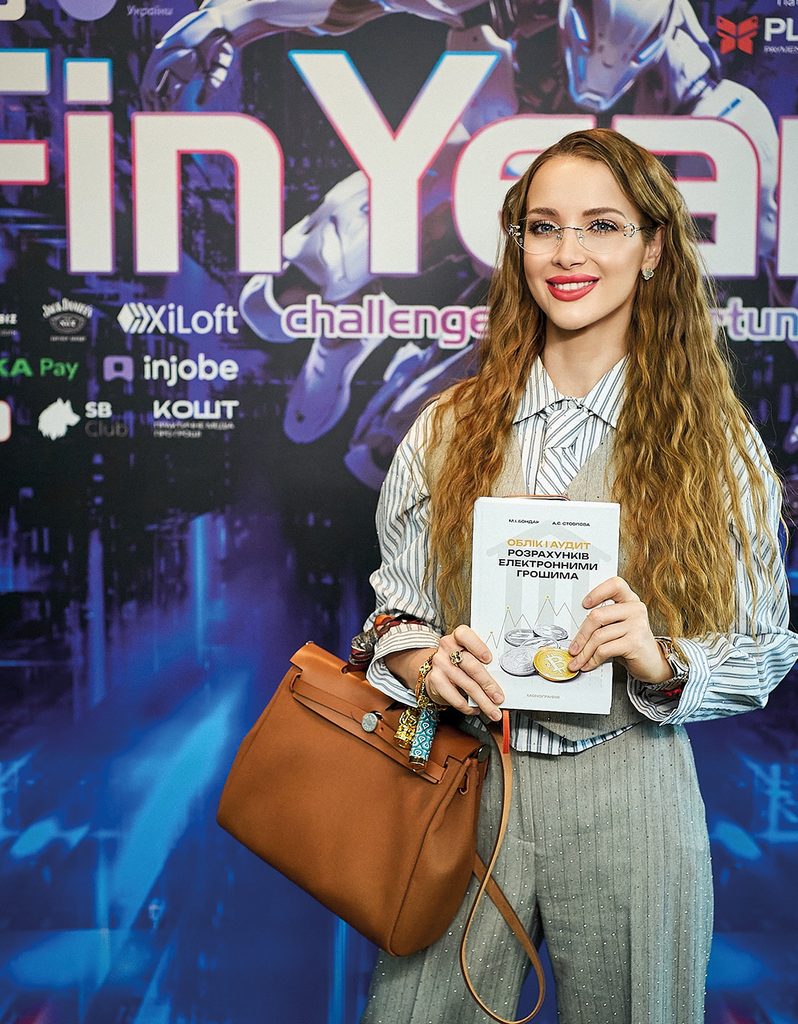
After returning to Ukraine, I was invited by the university to systematize the knowledge I had accumulated. That became my first academic book on digital currencies.
The turning point came when people began using digital currencies to address specific financial needs: investing, preserving capital, making international transfers, and settling payments. Practical adoption is what moved digital currencies beyond a specialized field and into the new financial reality.
From its Ukrainian edition to Amazon Worldwide and presentations across the United States, your book is now traveling the world. What convinced you that there was a global audience for Ukrainian expertise?
An important milestone was translating the book into English and making it available through Amazon Worldwide. But the strongest confirmation came from people’s reactions.
During my visit to Qatar for the Web3 Summit, the book opened the door to a professional conversation with government representatives, which led to an invitation to speak at an international conference.
Ukraine has significant practical experience with digital assets, which makes our perspective relevant to an international audience. What matters deeply to me is that wherever I present the book, Ukraine is always part of the conversation about the future of digital money.
I am now preparing to speak in Qatar about the intersection of digital currencies, programmable money, and autonomous mobility. A book that began as an academic project in Ukraine has become part of an international professional dialogue.
How do you expect the concept of money itself to change over the next five to ten years, and what should businesses and consumers be preparing for now?
Over the next decades, I believe the very logic of how we use money will change. Alongside traditional bank money, we will see the continued development of CBDCs, stablecoins, tokenized assets, and other digital financial instruments.
One of the key developments is programmable money. Payments can be executed automatically when predefined conditions are met: a car could pay for its own charging or parking, while businesses could automatically settle transactions once contractual obligations are fulfilled.
This transformation is already underway. The Bahamas launched the Sand Dollar, China is testing the digital yuan, and USDT and USDC are being used for international transfers and payments.
For businesses, this means faster payments, asset tokenization, smart contracts, and greater automation of financial operations. For consumers, it means the ability to manage different assets within a single digital ecosystem.
We are moving toward a hybrid financial system in which multiple forms of money will coexist.
Ukraine has demonstrated a strong openness to fintech. Where do we stand on the global digital-currency map, and in which areas could Ukraine become a significant player?
In Ukraine, the practical use of digital assets and people’s readiness to embrace new financial technologies are developing faster than the regulatory framework.
At the same time, we can learn from the European Union’s experience with MiCA. As an EU candidate country, Ukraine will naturally look to European standards, while also having the opportunity to see how those rules work in practice and what challenges they create for the market.
Ukraine already has a strong IT sector, a highly digitally adaptive population, and practical experience with new financial instruments. Combined with effective regulation, these advantages could position Ukraine as one of Europe’s notable digital-finance hubs.

What does someone need to know if they want to start investing in the digital economy but are afraid of losing money?
I would start with risk management. You need to understand economic cycles, the relationship between risk and potential return, diversification, investment horizons, and asset liquidity. The next step is to define your investor profile and create own strategy.
.
Digital security is equally important: understanding how exchanges and wallets work, protecting accounts and personal data, and verifying platforms. Financial decisions should not be driven by social media or FOMO.
Financial and technological literacy are now closely connected. My principle is, “Financial freedom is a choice.” The ability to make that choice begins with knowledge and taking responsibility for your own decisions.
In 2026, you received a FinAwards honor, and in September you were invited to speak at a conference in Qatar. What comes next for you — particularly your new book?
The FinAwards recognition from Minfin and Finance.ua was an important milestone for me: my book and Doctor of Digital Currency brand were recognized for their contribution to financial education and Ukrainian society.
And perhaps I can share this publicly for the first time with Business ML: the decision to write a second book has been made — and I am already working on it.
Its concept has been shaped by my international and practical experience. Across different countries, people ask remarkably similar questions: How do I preserve my money? How do I invest? How do I understand new financial instruments and navigate an increasingly digital financial world?
My first book explained, in academic terms, how money is changing. The second will be more practical, focusing on how we can adapt our financial mindset and behavior to those changes.
For now, I am keeping the title and part of the concept under wraps.
The author’s original wording and terminology have been preserved without editorial changes.