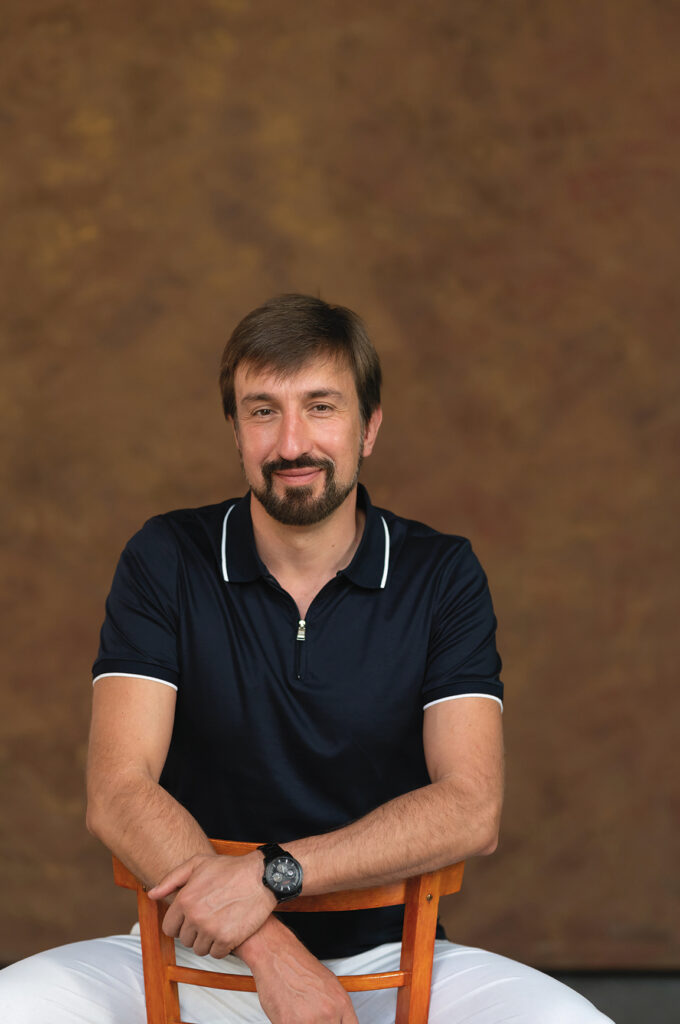
Oleg Popov: How Schools Become a Source of Stability for Children in an Unstable World
In a climate of постоянного напряжения and uncertainty, schools are no longer just places of learning. They are becoming environments where a child’s fundamental sense of safety is formed—without it, neither focus nor development is possible.
Oleg Popov works within an educational model where, alongside academic knowledge, psychological support, physical activity, and a child’s ability to understand their own state play a central role. In this system, choice, emotional literacy, and body awareness are integrated into the daily process rather than treated as add-ons.
In this conversation, he explains why the traditional model is losing effectiveness, how children’s behavior shifts within a supportive environment, and what it takes to scale such approaches system-wide.
Today, more and more families are living with limited resources—emotional, financial, psychological. In this reality, how can a school become a point of stability and inner support for a child?
There’s an observation by Maslow that I often return to: a person cannot think about the future until they feel safe in the present. This is where the responsibility of the school begins.
When there is instability at home—financial, emotional, or psychological—a child comes to school. If we meet them only with textbooks and grades, we lose. Not as an institution, but as people.
School is where a child spends most of their conscious day. What matters is not the number of hours, but what they experience during that time. Is there an adult they trust? Is there a space where they can be themselves—confused, tired, misunderstood?
That’s why we have a team of professional psychologists. Not one for everyone, but specialists who understand developmental stages, work with group dynamics, and see each child individually. There is both one-on-one and group work. But the key is culture: asking for help here is not something to hide—it’s a natural step.
We also focus on holistic development: body, intellect, and inner state. A child who understands their body, can think critically, and recognizes their emotions is far more resilient to external shocks.
Stability is not silence. It’s the feeling that you are seen. And that no matter what happens at home, there is a place where you can simply be yourself.
You speak about combining sport and psychological support as a systemic approach. How does this fundamentally differ from the traditional educational model?
The main flaw of traditional education lies in its priorities. It builds a system where the correct answer matters more than the individual, the schedule outweighs the child’s state, and “the same for everyone” is presented as fairness—when in reality, it’s convenience for the system.
The key difference is openness and choice.
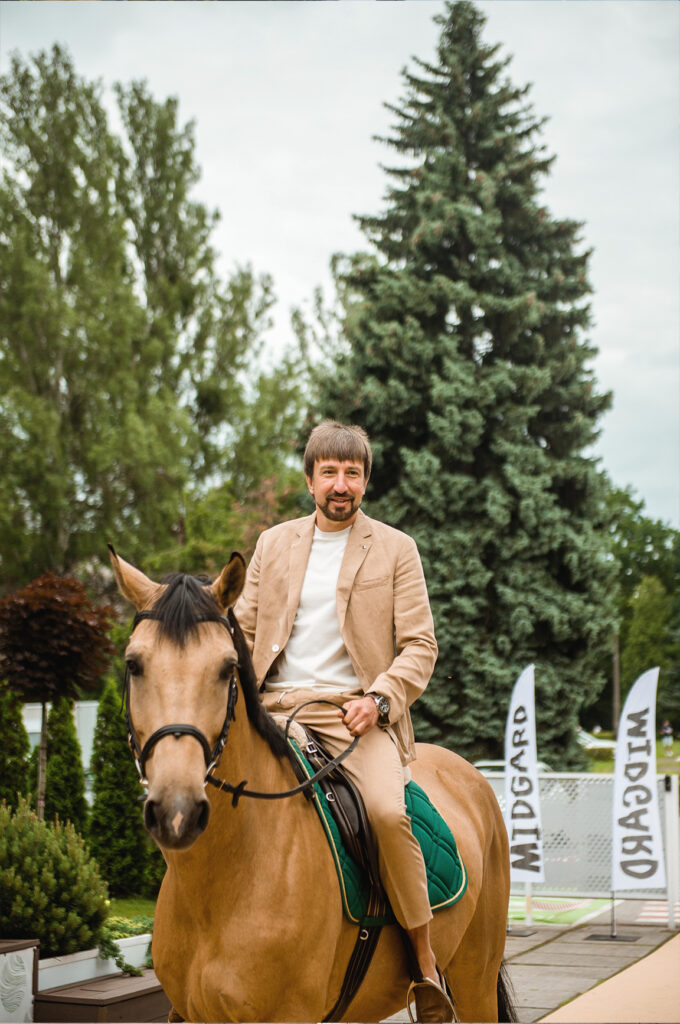
In a traditional school, there’s a physical education class where everyone does the same thing. In our model, a child chooses: swimming, padel tennis, equestrian sports, stretching. These are different ways of engaging with the body and different forms of recovery.
When a child makes that choice, they learn to understand their own needs.
As for psychology—we grew up in a culture where “just push through” was considered normal, and “I’m not okay” was seen as weakness. The result is obvious: many people can’t even name their own emotional state.
That’s why psychology here is not optional and not a crisis tool. It’s foundational: mandatory sessions, individual consultations, and an environment where a child can say “I need help” without fear or shame.
Our goal is not a top student or a champion. Our goal is a person who understands themselves.
Physical activity is often underestimated as a tool for emotional recovery. How exactly does movement help a child regain a sense of control and safety?
There are experiences you simply cannot develop sitting at a desk: a sense of strength, control over your body, confidence in your abilities. These come through movement.
From a neuroscience perspective, physical activity stimulates the production of dopamine, serotonin, and BDNF—a protein that supports neural recovery. In other words, movement doesn’t distract from learning—it enhances it.
A child who moves regularly concentrates better, regulates emotions more effectively, and copes with stress more easily.
In the context of war, this becomes especially important. When a child remains in a prolonged state of anxiety, the body stores tension—in muscles, breathing patterns, posture. Without an outlet, that tension accumulates.
Movement becomes a tool for restoring control and a basic sense of safety.
Psychological support in schools is not only about crisis situations. What role do daily practices—conversations, grounding exercises, emotional work—play?
Most people see a psychologist as someone you turn to only in extreme cases. It’s like going to the dentist only when you’re already in pain.
We work preventively.
The day begins with tutor circles—short check-ins where a child can acknowledge their current state. It’s not a formality; it’s an entry point into the learning day.
Teachers are also involved. They sense the state of the group and respond accordingly. You cannot effectively teach if a child is internally overwhelmed.
Another key focus is the language of emotions. A child learns to name their state: “I feel anxious,” “I’m struggling.” This reduces internal tension and creates space for conscious action.
The psychologist is not a distant figure. They are present—within the school, during breaks, in real interaction.
How does a child’s behavior and internal state change when a school takes on the role of a supportive environment, not just an educational one?
What exhausts a child most is not learning—it’s the constant need to defend themselves: from judgment, from ridicule, from the feeling of “I’m not enough.”
When that tension disappears, energy is freed.
We see this in practice: children begin to speak, ask questions, challenge ideas, propose solutions. Their willingness to take risks grows—and with it, their capacity to develop.
A culture of mutual support forms. Children notice each other’s states, respond faster, and resolve conflicts more easily.
A school functions like a mirror. If a child consistently sees themselves reflected as capable and worthy, that becomes their internal norm.
Can this model—where education includes emotional recovery—be scaled across the entire system? What would it require in terms of management and resources?
Education is closer to gardening than engineering. It cannot be assembled from a single template.
Scaling requires changes on several levels.
First, evaluation criteria. The system focuses on outcomes, but it must also account for the child’s state: safety, motivation, emotional stability.
Second, resources. One psychologist for hundreds of students cannot provide meaningful support. Teams must expand, and teachers must be involved in the process.
Third, content. Psychological literacy should become part of the educational framework.
And finally—leadership. A child’s emotional well-being must be treated as the foundation of education, not an optional add-on.
In the long term, what kind of person emerges from such an environment? What qualities become their foundation?
The key outcome is inner resilience.
A child enters the world with a sense of self-worth that does not depend on external validation. They can navigate difficult situations without losing their sense of integrity.
They know how to work with their emotions: to recognize them, not avoid them, and act consciously.
In relationships, this shows up as the ability to listen, communicate openly, and ask for help without internal barriers.
This is a person who acts from understanding rather than fear—and who retains a sense of grounding even in unstable conditions.