
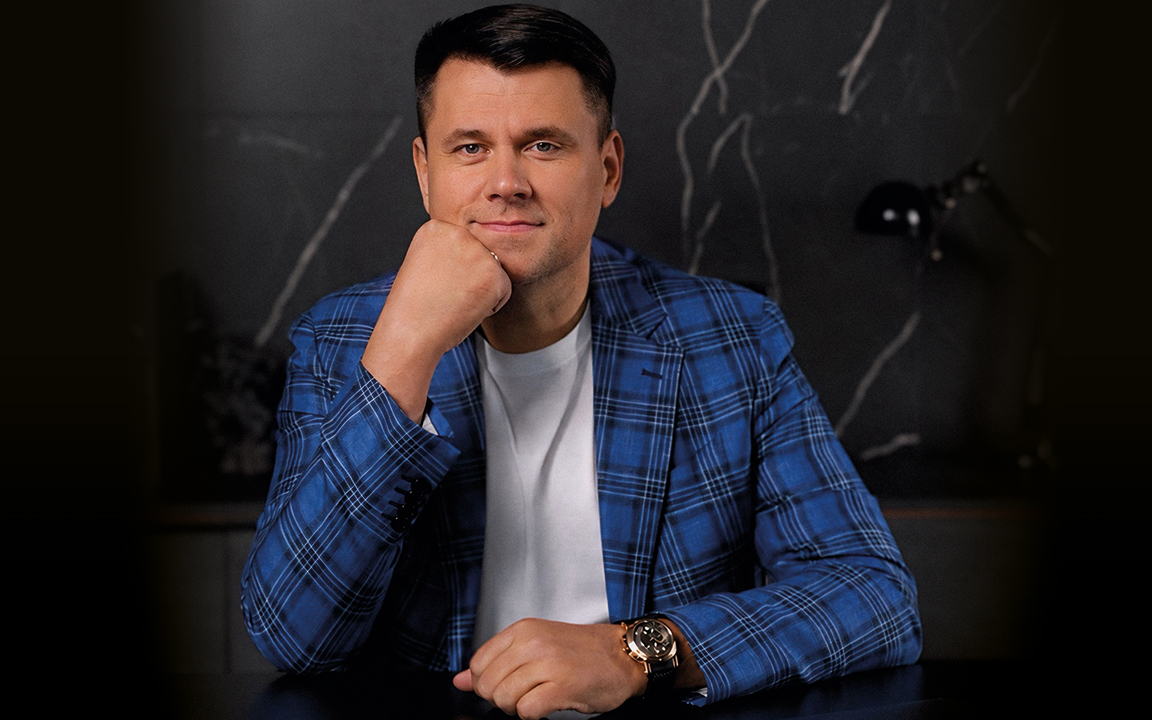
Oleg Mishchenko: Ukraine Should Export Finished Products, Not Raw Materials
Russia’s full-scale invasion forced much of Ukraine’s business sector into survival mode. Yet some entrepreneurs have chosen this moment to keep investing and building. One of them is Oleg Mishchenko, an entrepreneur and investor who has launched major manufacturing projects in recent years, investing more than UAH 550 million in the development of Ukraine’s food industry.
Today, his companies manufacture products sold through national retail chains and exported to 15 countries across Europe and Asia. His portfolio includes market leader Bakery Food Investment, the revived AQUA Myrhorod plant, new manufacturing facilities, investments in advanced technologies, community development initiatives, and ambitious plans for international expansion.
In this interview, we discuss investing during wartime, the economic responsibility of business, the future of Ukrainian manufacturing, and a strategy aimed at positioning Ukraine as one of Europe’s leading manufacturing hubs.
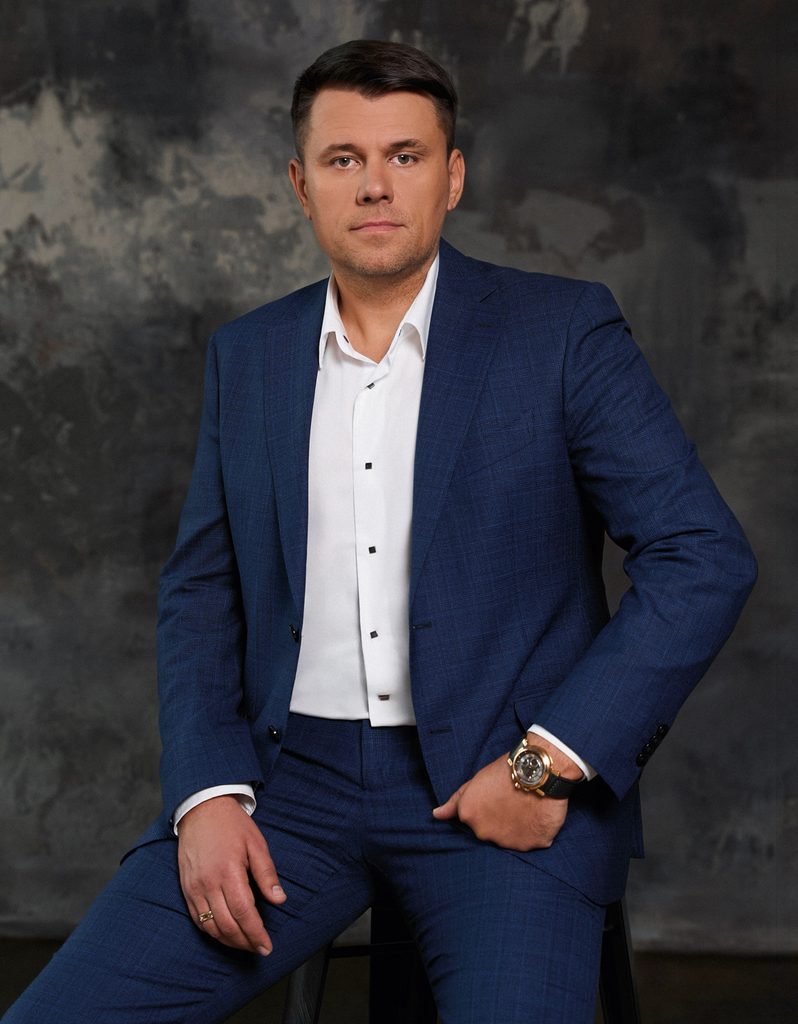
Oleg, BFI has invested more than UAH 550 million in new manufacturing facilities during an active war. The plant in Kozelets has been modernized, while Khust has just opened Ukraine’s first facility producing frozen pastries. How did you make that decision after one of your warehouses was destroyed in a missile strike, resulting in losses of more than UAH 50 million? Where do you draw the line between entrepreneurial courage and recklessness?
For me, the decision ultimately comes down to responsibility.
If Ukrainian businesses stop investing during the war, who will build the country’s economy? We all talk about victory, but victory requires more than a strong military. It also requires operating factories, tax revenue, jobs, and exports.
Yes, we lost a warehouse in a missile strike. That amounted to more than UAH 50 million in direct losses. But a missile cannot become a reason to stop building. On the contrary, it only reinforced my belief that Ukraine needs to become economically stronger.
Every new factory is an answer to the enemy. It is proof that the country is alive, producing, and moving forward.
The line between courage and recklessness is where careful calculation ends. We analyze every project very closely, but if it makes strategic sense, it needs to move forward regardless of the circumstances.
The Khust plant is being positioned as a “factory of the future,” with full automation, digitalization, and a planned capacity of up to 3,000 tons per month. At the same time, you are relocating confectionery production from Turkey to Tyachiv. How do you approach your portfolio of assets? Are BFI, AQUA Myrhorod, and the new confectionery plant part of a single ecosystem, or separate bets on different markets?
I see them as one large system. We are not building isolated businesses. We are creating a Ukrainian manufacturing ecosystem. BFI represents modern food manufacturing. AQUA Myrhorod is a strong Ukrainian water brand. The new confectionery plant expands our presence in the sweets category.
At the same time, we are entering another segment: healthy snacks and freeze-dried products. That will be our next manufacturing project.
We have also launched Loven Bistro at three locations in Kyiv, with plans to scale the concept across Ukraine and Europe. It is a bistro built around Ukrainian products made from high-quality ingredients using proprietary technology.
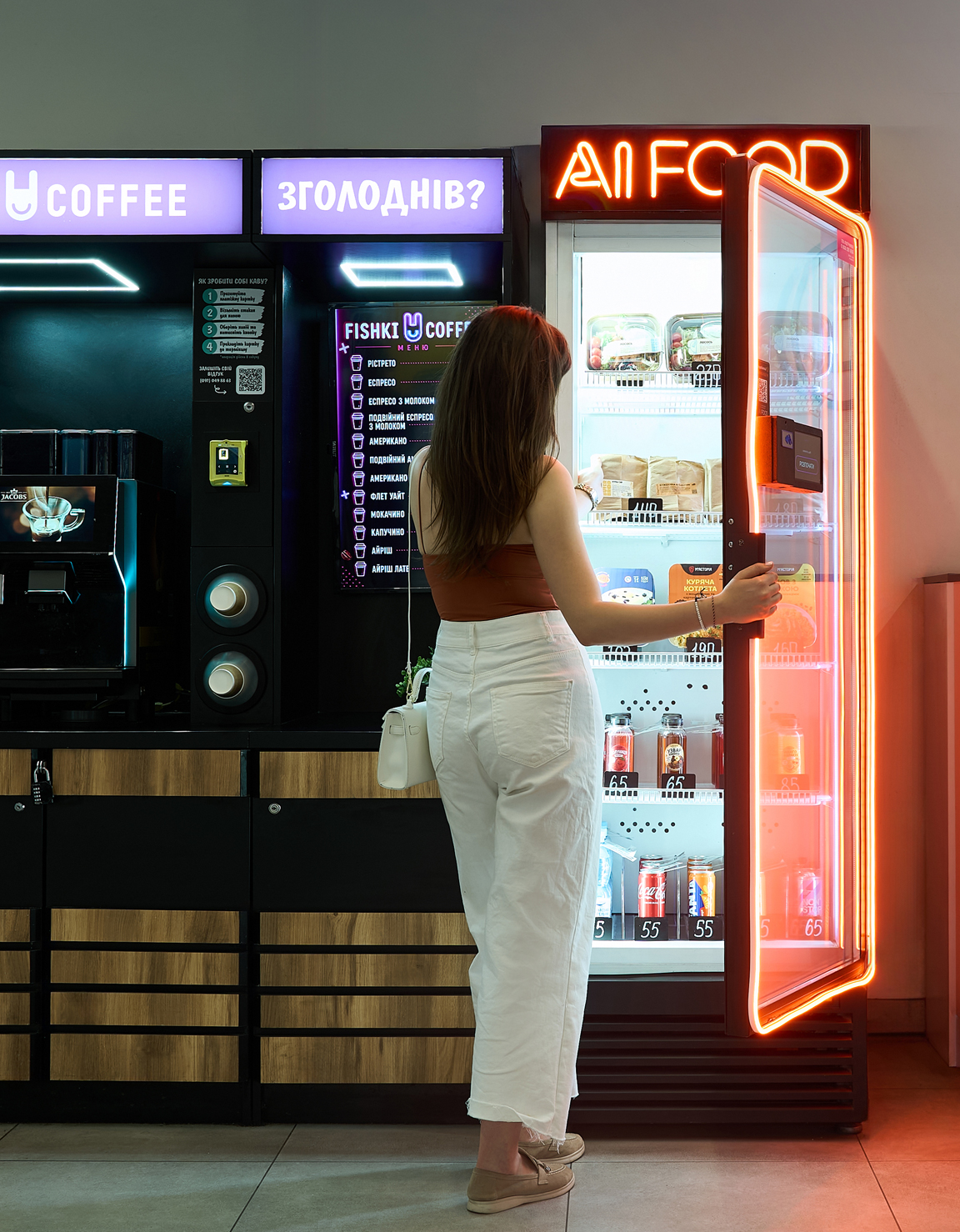
Another project, AI-food, is a modern format for selling grab-and-go products. We have developed a unique smart refrigerator technology that interacts with customers, provides information about the products, and features an integrated Face ID system.
Our manufacturing model goes beyond building our own facilities. We want to become a manufacturing hub for entrepreneurs who have unique technologies, strong products, or innovative solutions but need a production base, investment, and the ability to scale.
We are ready to bring these projects into our ecosystem and support them with manufacturing capacity, technological infrastructure, financing, logistics, access to retail chains, and entry into international markets.
I see this model as a major opportunity for Ukraine. We have many entrepreneurs developing compelling technologies and world-class products, but they often lack the resources to move from small-scale production to industrial-scale manufacturing.
That is where we can play a role: rather than developing every product from scratch, we can identify strong entrepreneurs and technologies, integrate them into our manufacturing platform, and help them scale.
Essentially, we want to create a model in which a Ukrainian entrepreneur comes to us with a technology and a product, and we provide the manufacturing hub, infrastructure, expertise, and market access.
This makes it possible to scale innovation much faster and establish new high-value-added manufacturing operations in Ukraine.
I believe partnership models like this can become one of the key drivers of Ukraine’s future industrial growth.
You deliberately registered the company in Oster so that its taxes would go directly to the local community. In Khust, you are developing a café, bakery, skating rink, and even a drive-in movie theater around the factory. Why is business taking on responsibilities traditionally associated with government? And do you feel that local communities are ready for genuine partnerships with private capital, or is this still the exception rather than the rule?
I don’t believe business is replacing the government. But business can serve as a catalyst for development. If a café, bakery, sports facility, or family recreation space opens next to a factory, people have more reasons to stay and build their lives there.
A strong community is shaped by more than roads and administrative buildings.
It is built through jobs, quality of life, and a sense of opportunity.
That is why we pay taxes where we operate. I want residents to see a direct connection between the growth of a business and the development of their community.
I believe this kind of partnership model will become the norm after the war.
Blackouts became a true test of survival for food manufacturers. BFI installed gas generators with capacity of up to 2 MW, completing the project in just two weeks through a partnership with Sense Bank under its “Dzherelo Enerhii” initiative. How is your energy independence structured today, and has cogeneration become a competitive advantage rather than simply a means of survival?
Absolutely. We no longer view our own power generation as an emergency solution. Today, it is a fundamental part of our competitiveness.
If a company can operate independently of external factors, it becomes a more reliable partner for both Ukrainian and international clients.
We invest in energy independence because a modern manufacturer needs to control not only its production processes, but also its own energy supply.
I am convinced that within a few years, most large Ukrainian factories will operate according to this model.
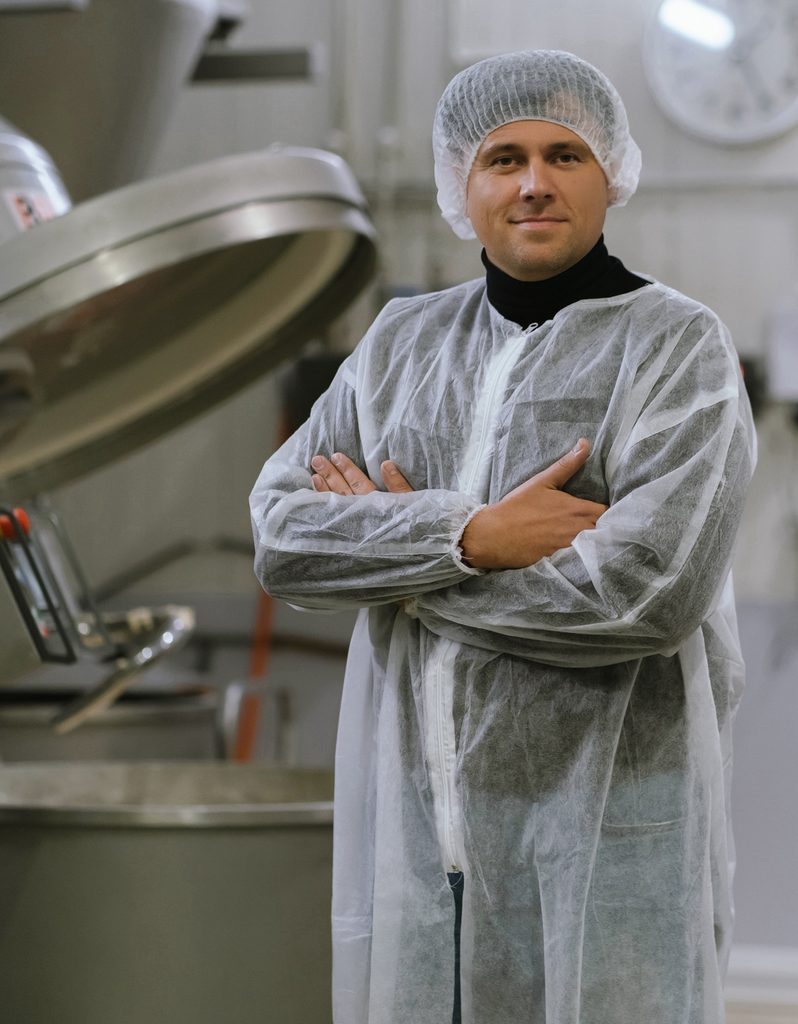
BFI already exports to 15 countries—including the United States, the United Kingdom, Israel, Turkey, and the Baltic states—and aims to increase exports to 30% of revenue. Opening your own bakery in Austria is the next step toward establishing a direct presence in the EU market. What is your model for international expansion: brand development, B2B supply, or your own retail infrastructure abroad?
Our primary goal is to sell more than products; we want to showcase Ukrainian quality. We are developing several channels simultaneously. The first is B2B. The second is our own brands. The third is gradually building our own presence in Europe.
Opening a bakery in Austria is only the beginning. It will be a next-generation bakery with its own R&D center, a showroom for B2B partners, an event space, and a café for Vienna residents and visitors.
We use Ukrainian-made products prepared at our facilities using blast-freezing technology and then use them to produce finished goods within the European Union.
For BFI, Austria will serve as an export logistics hub, a craft production site, and an opportunity to introduce European consumers directly to Ukrainian products.
I want Ukrainian products to be as close to the end consumer as possible.
My strategy is simple: manufacturing should remain in Ukraine. This is where jobs, added value, and tax revenue should be created.
AQUA Myrhorod is a plant that had been mothballed for decades before you revived it during the full-scale invasion. You began by supplying drinking water on a noncommercial basis to Kherson and other affected cities. How do you reconcile commercial logic with a humanitarian mission, and where does the business model fit into that equation—one that allows a company not only to survive, but to scale?
I don’t see a contradiction between the two. During a war, business cannot exist separately from the country.
When people were left without water, we simply could not think only about profit. When people had no bread, we baked it in Kozelets and delivered it to the regions that needed it most.
First, you help. Then you build the business.
I am convinced that companies with strong values ultimately win over the long term. Trust is a form of capital, too—sometimes even more valuable than financial capital.
You have an approved UAH 800 million investment program with Sense Bank, are building housing for internally displaced people in Khust, plan to create up to 500 new jobs, and are targeting new B2C segments by 2027. What does Ukraine need—institutionally, in terms of regulation, and in infrastructure—to produce dozens of stories like BFI rather than isolated examples?
The fundamentals are straightforward: predictable regulations, access to financing, war-risk insurance, a strong export policy, and the fastest possible procedures for building new manufacturing facilities.
Most importantly, Ukraine needs a national strategy that tells the world: Ukraine is Europe’s future manufacturing hub.
I am convinced that the food industry can become Ukraine’s economic miracle. We have the land, the people, the technology, the entrepreneurs, and tremendous experience. We need to stop thinking in terms of survival. We need to start thinking in terms of leadership.
My personal dream is very simple: twenty years from now, I want someone in any European country to walk into a supermarket, pick a Ukrainian product off the shelf, and not even think twice about the fact that it was made in Ukraine—because Ukrainian quality will have become an unquestioned standard.
That is what we are building factories for today.