
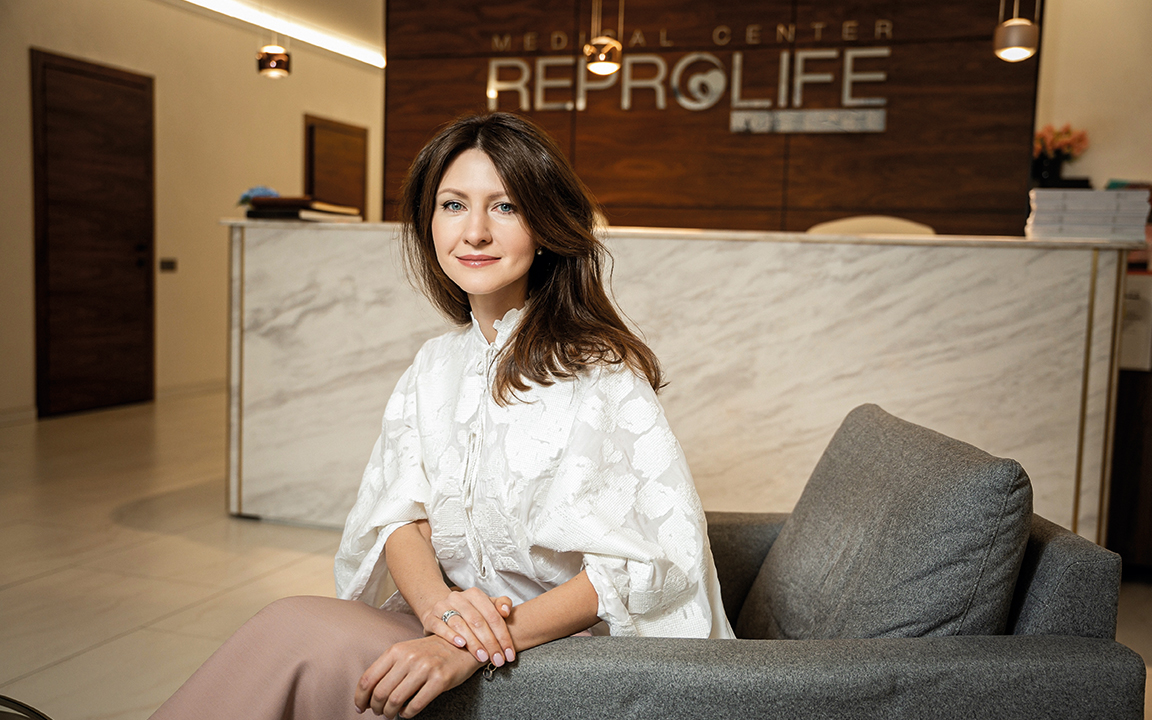
Olga Romanova on Reprolife, Modern Fertility Care, and the Right to Hope
For more than 20 years, Olga Romanova has worked in women’s and reproductive health. In 2016, just one month after the birth of her second child, she founded Reprolife — a clinic that combines advanced reproductive technologies, evidence-based care, and an individualized treatment strategy for every couple.
We spoke with Romanova about building Reprolife, the possibilities of modern fertility care, the myths surrounding IVF, treating patients after years of unsuccessful attempts, and why doctors need to be honest about the odds without taking away a patient’s hope.

Reprolife positions itself as a clinic where every case is unique. What does truly personalized fertility care mean to you — and where do you draw the line between medical protocols and a physician’s clinical judgment?
In reproductive medicine, no two stories are alike. Age, ovarian reserve, hormonal profile, genetics, lifestyle, previous treatment attempts, and a couple’s psychological state all create a clinical picture unique to each patient.
Personalized care means choosing the right protocol while paying attention to the details: how the hormonal system responds, how the endometrium behaves, whether genetic factors are involved, and how ready the couple is to move forward.
Protocols provide the science, evidence, and safety. Clinical experience allows a physician to recognize when an individual case calls for a different approach.
We begin by understanding the clinical picture. Sometimes we need to restore the menstrual cycle, correct hormonal imbalances, improve the endometrium, or address male-factor infertility. Sometimes IVF is not the best treatment; in other cases, it is the only effective path.
At Reprolife, we bring together each couple’s individual history, clinical judgment, and a deep respect for the person.
Which technologies or methods do you consider the true breakthroughs of recent years — and which of them have already been implemented at Reprolife?
I value innovations that genuinely improve the chances of a healthy pregnancy, rather than those that simply sound impressive at conferences.
For me, the key breakthroughs include:
- genetic testing that allows us to select a chromosomally and genetically healthy embryo for transfer;
- fertility preservation programs that allow reproductive cells or embryos to be preserved for future use;
- time-lapse culture, precise embryo quality assessment, and optimized transfer timing;
- the “freeze-all” approach and frozen embryo transfer protocols to select the safest and most effective time for transfer;
- individualized stimulation protocols that take genetic factors, the risk of ovarian hyperstimulation, and diminished ovarian reserve into account;
- endometrial care, including the diagnosis and treatment of chronic endometritis, determination of the implantation window, and microbiome support.
These are the approaches we systematically use at Reprolife.

What are the most common myths you encounter — and which ones would you like to dispel once and for all?
“IVF is a guarantee.” Modern reproductive technologies offer many possibilities, but even the best clinic cannot guarantee a 100 percent success rate.
“I still have time. I’ll have a baby after 40.” It may be possible, but ovarian biology does not always follow our plans. The most effective strategy is to preserve eggs or embryos at a younger age for future use.
“If it didn’t work the first time, there’s no point in trying again.” That isn’t true. Often, analyzing the first unsuccessful attempt gives us the key to achieving success later.
“The female factor is all that matters.” Male-factor infertility accounts for up to 50 percent of the reasons a pregnancy may not occur. We need to look at the couple as a whole rather than focusing solely on the woman.
My message is simple: fewer myths, more knowledge and verified information, along with a consultation with an experienced fertility specialist who can assess your individual situation.
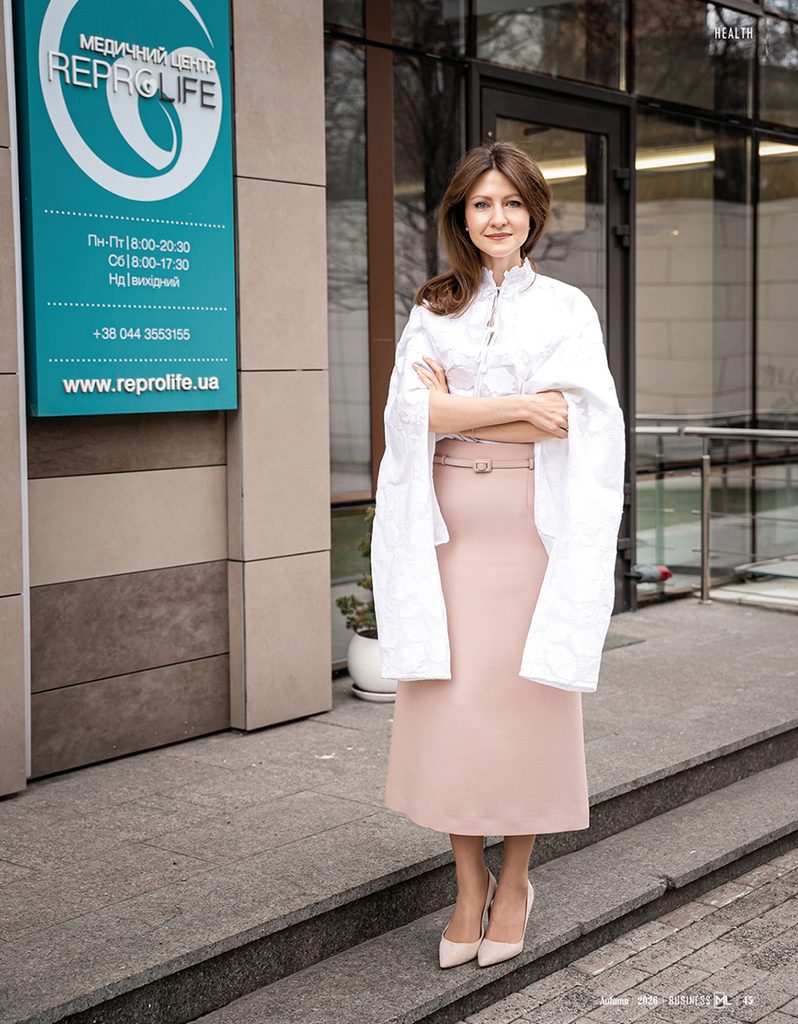
If a woman came to you at a crossroads — wondering whether to keep trying or let go of the dream — what would you tell her as a doctor and as a woman?
As a doctor, I would first do everything possible to answer one question honestly: Is there still a realistic medical chance?
If there is a chance — even a small one — we will keep trying, but with a different approach and a plan in which every step has a clear purpose.
As a woman, I would say this: You have the right to be tired. But you also have the right to hope and to have a team beside you that will not let you give up too soon. Believe in yourself, trust your medical team, and don’t give up until we have exhausted the available medical options. We will do everything we can so that one day, you can hold your child in your arms.

