SpaceX After Its IPO: How the Most Anticipated Market Debut of the Decade Became a Reality Check for Investors
When SpaceX finally went public on June 12, many analysts called it a defining moment for the capital markets. The largest IPO in history was expected to mark the beginning of a new era for the U.S. technology sector—and give investors a long-awaited opportunity to own a stake in a company that had evolved far beyond a commercial space launch provider.
The excitement, however, proved short-lived.
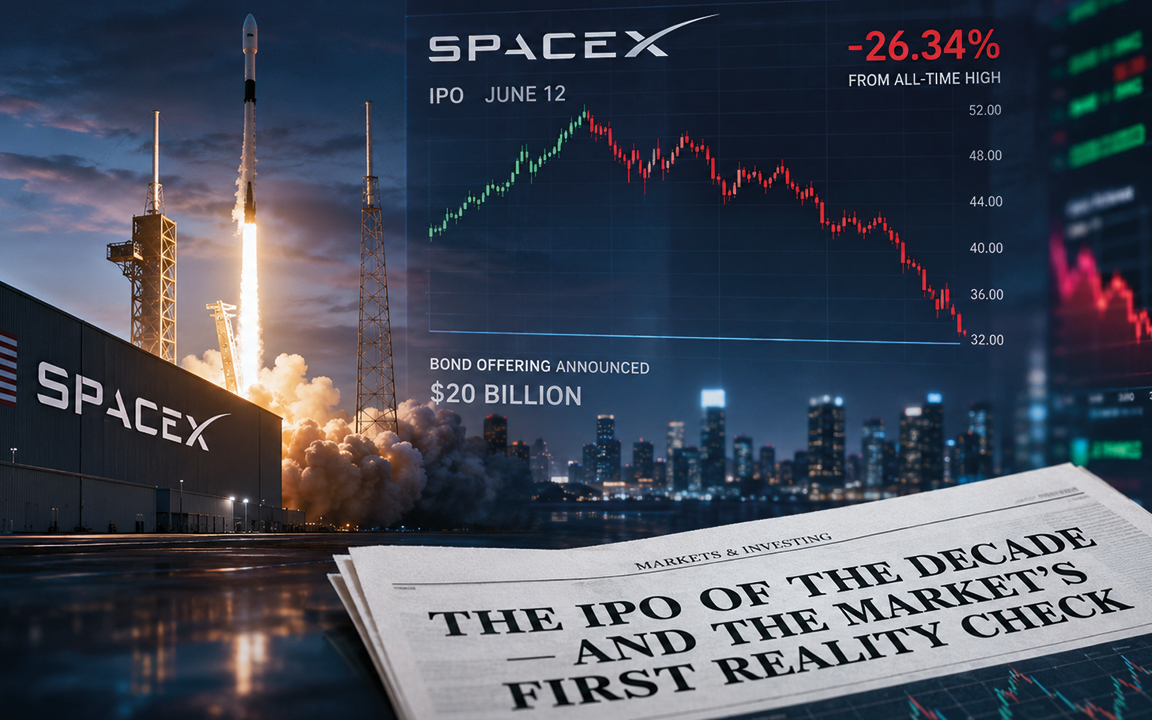
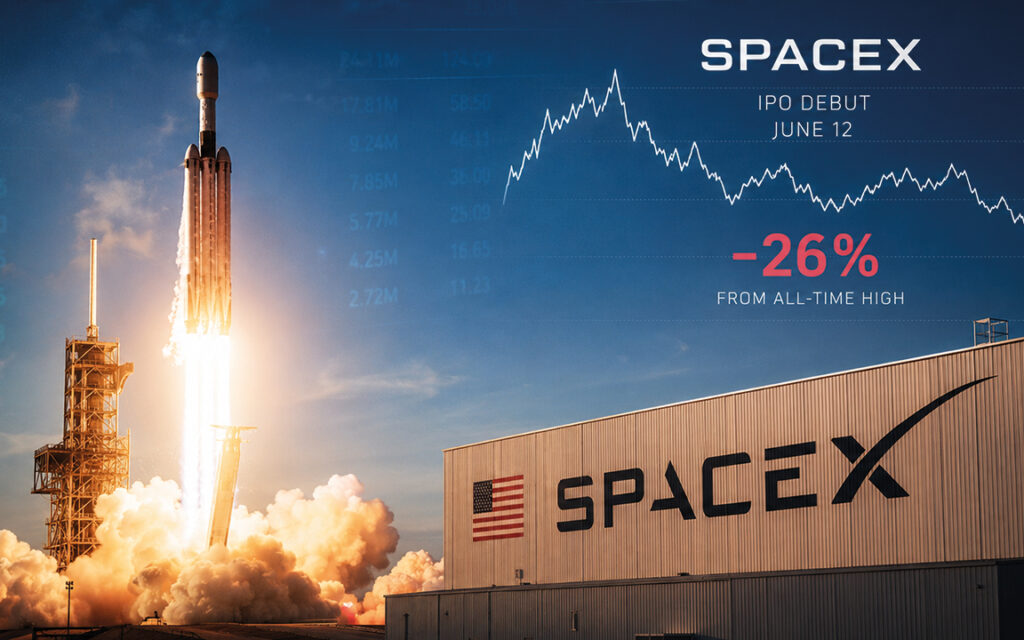
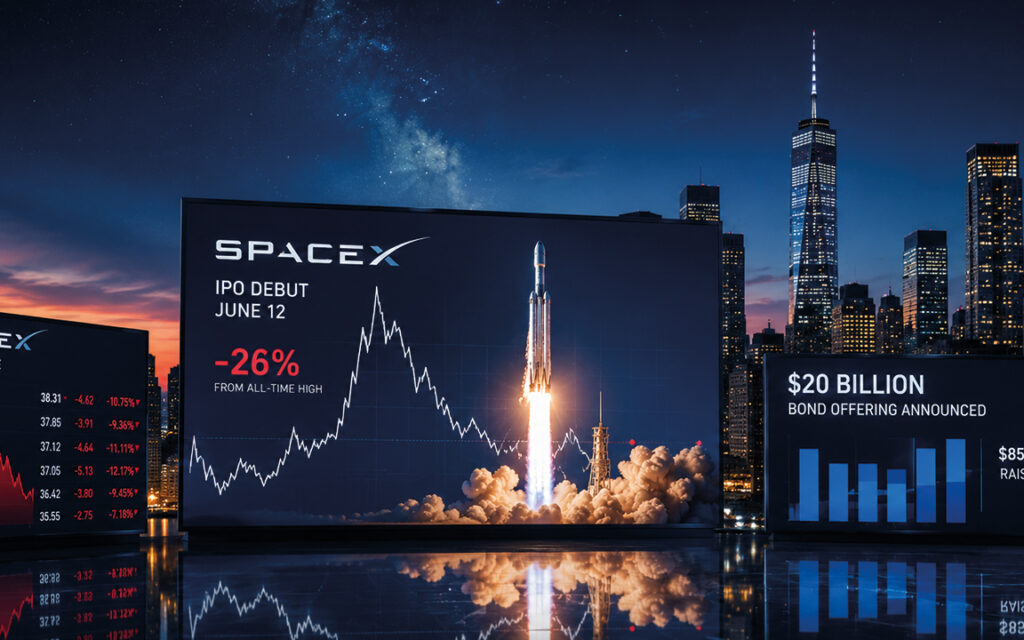
After an explosive debut, SpaceX shares fell more than 26% from their all-time high. At nearly the same time, the company announced plans to raise an additional $20 billion through a bond offering, despite having already secured $85 billion in fresh capital through its IPO.
The sequence of events sparked a broader conversation across Wall Street: even for one of the world’s most innovative companies, how much optimism can investors realistically price in?
The IPO Closed One Chapter—and Opened Another
For more than two decades, SpaceX remained one of the world’s most valuable private companies.
During that time, it transformed from an ambitious aerospace startup into a diversified technology powerhouse spanning commercial launch services, Starlink’s satellite internet network, next-generation spacecraft, AI infrastructure, and long-term space exploration initiatives.
Its public debut wasn’t viewed as just another IPO—it was widely seen as a milestone capable of setting the tone for the broader equity market.
The first hours of trading appeared to validate that expectation. Investors rushed in, demand surged, and the company’s valuation climbed rapidly.
But once the initial excitement faded, the market returned to fundamentals.
Great Companies Can Still Be Overpriced
Few investors questioned the quality of SpaceX’s business.
Its technological leadership remains virtually unmatched.
Instead, the debate centered on valuation.
Can even a company with SpaceX’s competitive advantages justify a market capitalization that already assumes years—if not decades—of future growth?
Before the IPO, analysts at Morningstar cautioned that investor enthusiasm could push the stock well beyond its intrinsic value. In their view, the company’s fair value was materially lower than the anticipated trading price.
The subsequent pullback only reinforced that argument.
Why Raise More Capital After a Record IPO?
At first glance, issuing billions of dollars in new debt immediately after the largest IPO in history may seem contradictory.
In reality, it reflects the economics of scaling one of the world’s most capital-intensive technology businesses.
SpaceX is simultaneously funding the development of Starship, expanding the Starlink constellation, investing in AI infrastructure, and building new data centers—all projects requiring enormous upfront investment years before reaching full commercial maturity.
For companies operating at this scale, even record-breaking equity financing doesn’t eliminate the need for additional capital.
Investors Are No Longer Buying Vision Alone
SpaceX has become one of the clearest examples of how investor expectations have evolved in 2026.
Only a few years ago, ambitious long-term narratives and disruptive technology were often enough to justify premium valuations.
That environment has changed.
Today’s market is placing greater emphasis on free cash flow, capital expenditures, debt levels, profitability, and the pace at which innovation can be translated into sustainable revenue.
Even the world’s most celebrated technology companies are no longer receiving a “vision premium” by default.
This Isn’t a Failed IPO
Calling SpaceX’s market debut a disappointment would be misleading.
Investor demand remained exceptionally strong, and the company’s rapid inclusion in the Nasdaq-100 underscored its importance to institutional investors. The move is expected to trigger billions of dollars in passive inflows from index-tracking funds.
At the same time, the market delivered a clear message.
No company—regardless of its reputation, founder, or technological leadership—is immune to valuation discipline.
A Blueprint for the Next Wave of IPOs
SpaceX may ultimately become the benchmark against which future blockbuster IPOs are measured.
Several major artificial intelligence companies are widely expected to enter the public markets over the coming years, and investors will likely use SpaceX as a reference point when evaluating those offerings.
The biggest lesson extends well beyond one company.
Markets are becoming increasingly selective about how they price growth.
The End of the Hype Premium
Nothing about SpaceX’s technological leadership has fundamentally changed.
The company remains one of the world’s most ambitious innovators, operating at the intersection of aerospace, telecommunications, artificial intelligence, and advanced manufacturing.
What has changed is the market itself.
Investors are placing less value on compelling narratives and greater value on a company’s ability to convert groundbreaking innovation into predictable financial performance.
That shift may ultimately define the next generation of technology investing more than any single IPO ever could.