The First Trillion Dollars: How Elon Musk Rewrote the Rules of Wealth Creation
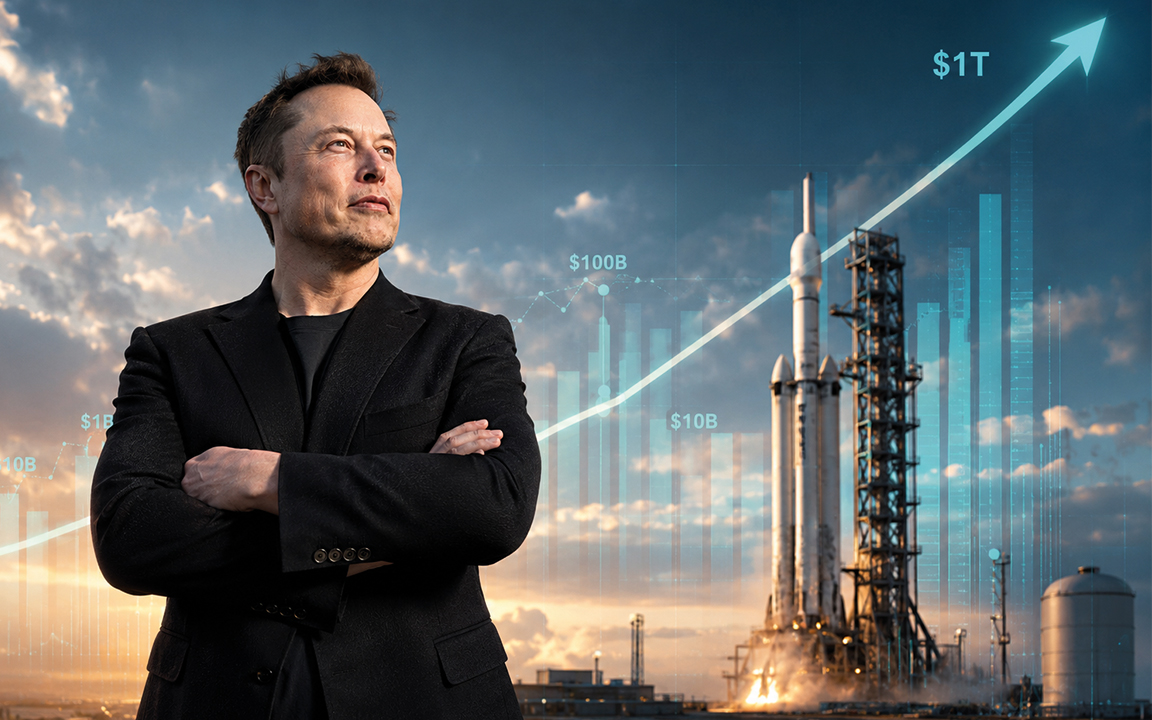
Elon Musk has become the first person in history whose net worth has surpassed the $1 trillion mark. The milestone is the result of years of growth in the value of his technology assets—most notably SpaceX and Tesla—and underscores the transformation of the high-tech sector into the primary engine of private wealth creation in the 21st century.
Reaching the trillion-dollar threshold is more than a personal achievement for the entrepreneur. It highlights the scale of capital concentration within the technology economy and once again draws attention to the role innovative companies play in shaping global markets.
From PayPal to the Largest Private Fortune in History
Musk’s career remains one of the most striking examples of how technological innovation can be translated into extraordinary market value. In the late 1990s, he sold his first company, Zip2, and later became one of the key figures behind PayPal, whose sale generated hundreds of millions of dollars for him.
Unlike many entrepreneurs who shift toward conservative investment strategies after achieving major financial success, Musk reinvested his capital into companies operating in markets characterized by exceptionally high risk and long investment horizons.
Most notably, those companies were Tesla and SpaceX—ventures that many investors and analysts viewed with considerable skepticism in the early 2000s.
Two decades later, those same companies have become the foundation of his wealth.
Tesla emerged as one of the key drivers of the global electric vehicle market and helped redefine how automotive companies are valued, encouraging investors to focus not only on production metrics but also on technological potential.
SpaceX, meanwhile, created a new economic model for commercial space launches, dramatically reducing the cost of sending payloads into orbit while strengthening the United States’ position in the global space sector.
Starlink, xAI, Neuralink, and a range of other ventures operating in satellite communications, artificial intelligence, and neurotechnology have also become important components of Musk’s broader business ecosystem.
How Musk Reached the $1 Trillion Mark
Crossing the trillion-dollar threshold was not the result of a one-time payout or dividend distribution.
Rather, it reflects the market value of the assets Musk holds through stakes in both public and private companies.
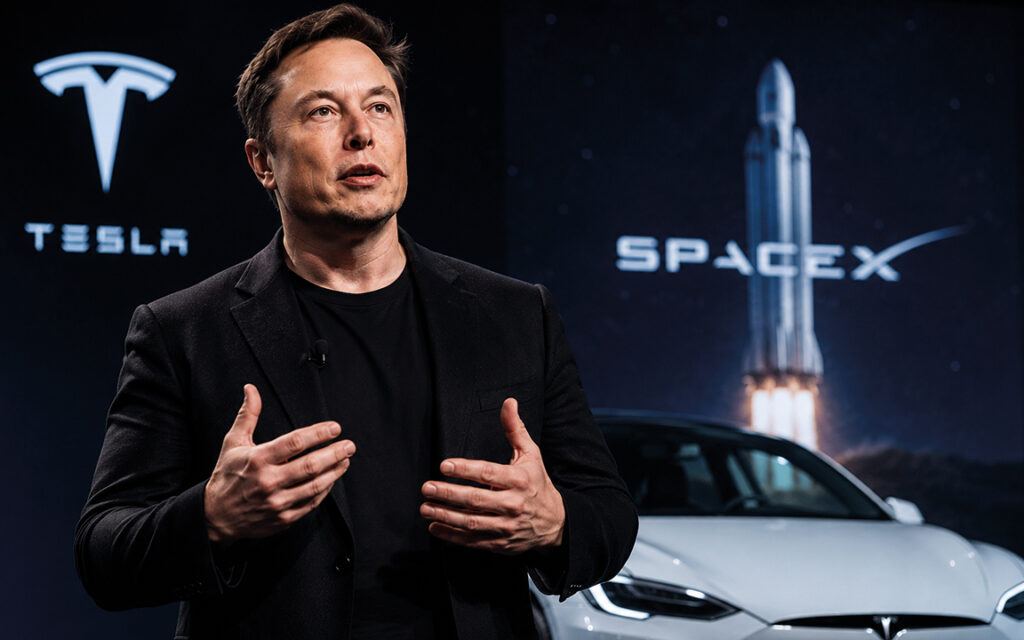
The decisive factor was the rapid appreciation of SpaceX, which has evolved into one of the world’s most valuable technology companies in recent years. At the same time, Tesla continues to make a substantial contribution to Musk’s overall net worth, remaining one of the most valuable assets in the global automotive industry.
When investors assign a higher valuation to a company, the value of its shareholders’ holdings rises accordingly. It is this mechanism that ultimately allowed Musk’s fortune to surpass the historic $1 trillion milestone.
In practical terms, it represents the largest private fortune ever built primarily on technology assets.
A Trillion Dollars Is Not a Bank Account
As impressive as the number may be, it is important to understand that a trillion dollars does not exist in the form of cash or funds sitting in a bank account.
The vast majority of Musk’s wealth consists of stocks and ownership stakes in companies. The value of those assets is determined by the market and can fluctuate daily based on corporate performance, investor sentiment, and broader economic conditions.
That is why large fortunes are often described as “paper wealth.” If the valuations of Tesla or SpaceX decline, the overall value of Musk’s assets could fall by tens—or even hundreds—of billions of dollars.
Conversely, continued growth in those companies could increase his net worth without generating any additional cash income.
In this context, a trillion dollars is primarily an asset valuation rather than money readily available for immediate use.
Taxes and a New Wave of Debate Around Extreme Wealth
Musk’s trillion-dollar milestone has once again reignited the debate over the taxation of extreme wealth.
In most developed economies, gains in asset value are not taxed until those assets are sold. As a result, a significant portion of the wealth held by the world’s richest individuals exists as unrealized capital gains that generate no tax liability until the assets are monetized.
Critics argue that this framework allows the ultra-wealthy to accumulate vast fortunes at a pace that far exceeds the growth of their tax burden.
Musk, however, has repeatedly emphasized that he has paid billions of dollars in taxes following the sale of Tesla shares and the exercise of stock options. One such payment became one of the largest tax bills ever paid by an individual in U.S. history.
With the emergence of the world’s first trillionaire, discussions about potential reforms to the taxation of large fortunes are likely to intensify.
What the First Trillionaire Really Means
The significance of this milestone extends far beyond Elon Musk’s personal story.
First, it demonstrates a new model of wealth creation in which the most valuable assets are no longer natural resources or traditional financial instruments, but global technology platforms.
Second, Musk’s rise confirms that the greatest concentrations of value today are found at the intersection of several strategic industries—including space exploration, artificial intelligence, digital infrastructure, electric transportation, and telecommunications.
Third, the trillion-dollar benchmark may lead to increased scrutiny of technology corporations and their influence on the economy, politics, and national security.
Analysts do not rule out the possibility that other leaders in the technology sector could approach the trillion-dollar mark in the years ahead. Yet it was Musk who became the first to cross that threshold.
A New Financial Benchmark for the 21st Century
The achievement of a $1 trillion net worth illustrates the scale of capital concentration within the technology sector and reinforces the idea that companies operating at the intersection of space, artificial intelligence, digital infrastructure, and advanced technologies are shaping the architecture of the global economy.
The arrival of the world’s first trillionaire is more than a financial milestone—it is a marker of a new era in global business. It demonstrates how dramatically the sources of wealth creation have evolved over the past two decades and highlights the central role technology now plays in that process.
Today, a trillion dollars is no longer a hypothetical figure. It has become a new financial benchmark for the 21st century.