Tamara Zhukova: Four Projects During the War and Faith in New Beginnings
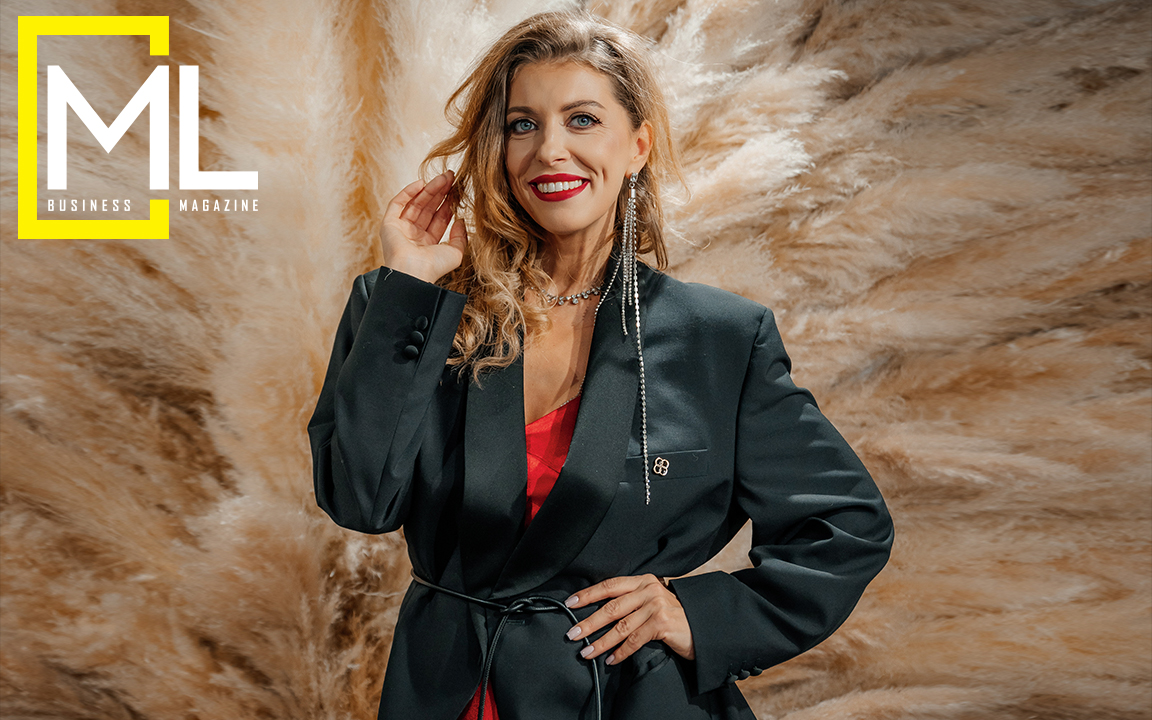
Tamara Zhukova is a psychologist and entrepreneur who launched four projects during the full-scale war. She combines her work in business with public activity, helps children, volunteers, and has raised a successful son. In this interview, Tamara talks about the main challenges of entrepreneurship during wartime, the changes she observes in people as a psychologist, and why the most important thing is to be able to start over.
During the war, you launched four projects. What was the hardest part — finding resources, building a team, or believing it was even possible? And how did you overcome the moment of inner doubt?
Honestly, believing it was possible was not hard at all, and neither was launching them. The hardest part was finding “your” people. I believe that “your” people are a great value. A team is made up of people who become like-minded partners in launching any product. When you gather your own team — people who see and “breathe” in unison with you — that’s when a real breakthrough happens. So, the most difficult part is always selecting truly motivated staff who, just like you, are ready to jump into new projects, create something new, and believe in you and in what you are doing. And faith here is a very important component.

As an entrepreneur and psychologist, you see society through the prism of both business and human emotions. What changes in people’s behavior during the war have surprised you the most — in a good or concerning way?
What saddens me most, as both a psychologist and an entrepreneur, is people’s unwillingness to restore their “life energy.” And what is “life energy”? It’s the ability to start over. I see how people, having lost what they had been building for many years, grieve over what’s gone and cannot make themselves act, move toward new heights. Yes, I understand: starting over is always hard. But it is the only path to growth. If you don’t create anything, a person quickly loses their sense of purpose, nothing interests them, and they begin to simply “live out” their days. This leads to harmful habits, procrastination, and chronic or acute illnesses. I believe in people creating and knowing that from any point, even from the bottom, you can rise again. My biggest disappointment is that many have simply given up. And I want people to believe: there is another way.
You are a volunteer, a mother, Miss Europe, and a public figure. How do these roles intersect? Do they sometimes interfere with one another, or, on the contrary, give you unexpected resources?
Right now, they no longer interfere. My son is 19, and the role of “mother” has moved to the third plan because he is independent, an adult, living abroad, studying, and working. I am now a “long-distance” mother, a mother for important conversations. Our relationship is such that there is no dependency on daily calls. This allows other areas of my life to come forward more strongly.
As for the “Miss” title, for me it is a kind of mission, an example, and a reason to do good deeds. This overlaps with my volunteer work: I help sick and inclusive children, take part in fundraising — especially before the school year — for one foundation. I prefer not to name these foundations because I never publicize my volunteer work. I live according to my conscience, believe in cause and effect: everything you give will return to you, and even more. The main thing is to give with pure intentions. I do this for myself, not to add more “medals” to my name. So, I can’t really say these are separate roles. They are parts of my life in different periods, each requiring more attention so that I could fully live through that experience.
What external factors have the greatest impact on the success of projects in Ukraine today? And is there anything that can be turned from a threat into a growth point?
The biggest thing that holds people back is fear. Many have lost faith in a better future or in the idea that everything will end and a bright time will come. It’s hard to create projects if you put everything on the line and focus only on the outcome. Projects are easier when there is an inner response: “I want to do this, I enjoy it, I see my growth here.” For me, financial gain is not the main thing. This may not be a purely business approach, but it’s my philosophy.
What can be turned from a threat into growth? Any ending is the beginning of something new. You have to remember: when one door closes, another opens. The greatest threat to a person is themselves — with their internal destructive programs and lack of self-belief.
In Ukraine, there is a lot of talk about mental resilience right now. From your point of view, what is more important — developing personal psychological resilience or working on community resilience?
Without a doubt, you must start with personal psychological resilience. It is impossible to build a new society if you are “empty” inside. There’s a great phrase: you can’t clothe another person if you are naked yourself. You can only give something to others when you are already filled — with knowledge, resources, ideas.

It is difficult to accept that even when there are plenty of free tools available that can truly change one’s life, many people still do not want to use them. People believe that the world should adapt to them, rather than them adapting to the world. In reality, life is merely a projection of your inner state.
Imagine that 10 years from now, your son is telling someone about you. What one story from your life would you want him to be sure to share?
It was winter, bitterly cold. My parents and I were walking to visit my godfather. I was wearing a fur coat that was far too small for me: the sleeves were short, it didn’t fit properly. My hands and feet were freezing. I had no other outerwear, and my parents at that time couldn’t afford to buy me a new one. I felt like everyone else — my father, my mother, my older brother — looked nice, and I was the most overlooked and unhappy child.
At 10 years old, I promised myself that when I grew up, I would never live like that again. I would buy myself a new fur coat that would keep me warm. That was my first deep encounter with fear — I am still very afraid of the cold. I love warm countries because I can’t tolerate frost. At 30, I kept that promise: I bought a beautiful mink coat. I wore it for a year, then realized it was only about fulfilling the promise to that little girl who had been so cold. It was about never being in the cold again. This is the story I would want my son to tell when someone asks him to share something interesting about his mother.