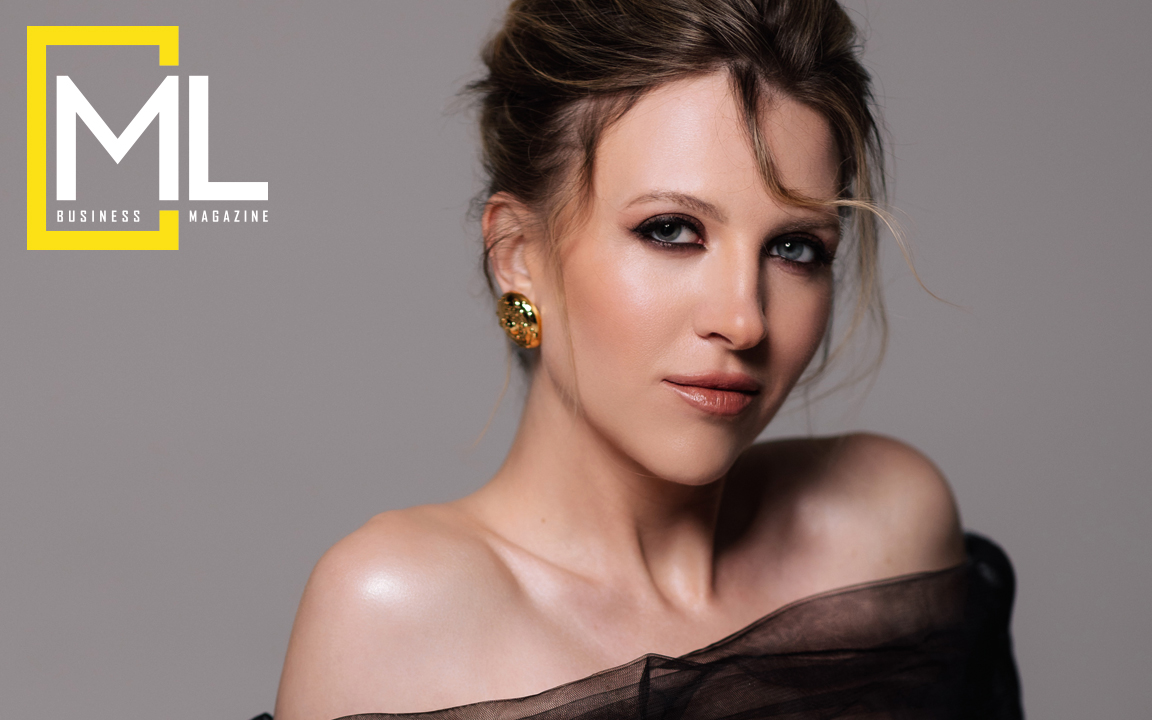
Dariya Tishchenko: When Aesthetics and Medicine Work Together for Results
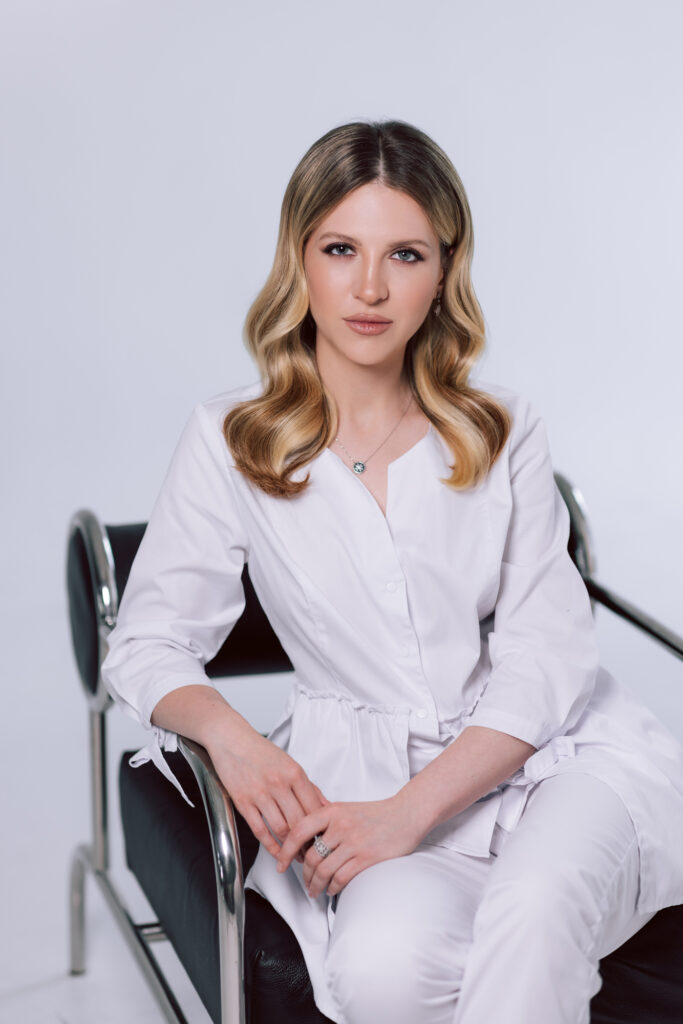
Dariya Tishchenko is a dermatologist and aesthetic medicine doctor who combines scientific precision with a refined sense of beauty. She doesn’t chase trends — she creates personalized solutions grounded in medical knowledge, a healthy approach, and a deep understanding of the skin. In her practice, beauty is a reflection of health, and every procedure is part of a carefully thought-out journey toward harmony with oneself.
How did it all begin? Why dermatology and aesthetic medicine?
Was it curiosity about skin, a desire to help, or an innate sense of aesthetics that gave the initial push?
It all started with a genuine fascination with dermatology. During my internship, I realized how closely dermatology, aesthetic medicine, and cosmetology are connected. Issues like post-acne, uneven skin tone, or dullness can’t be solved with home remedies alone. That’s where professional tools come in — both dermatological and aesthetic. So the idea to combine these fields into one cohesive system came naturally.
The very first impulse was probably curiosity about skin. Like many girls, I wanted clear, even-toned, fresh-looking skin, free from puffiness or breakouts. From an early age, I had a strong desire to help — I wanted to heal everyone around me, people and animals alike. And, of course, a sense of aesthetics — it’s something deep-rooted, either you have it or you don’t. In my case, it’s always been there.

To be honest, I didn’t initially plan to combine dermatology with aesthetic medicine. I thought I’d become a classical clinical dermatologist. But over time, I understood that dermatology covers more than three thousand conditions, most of which are chronic. My mission as a specialist isn’t just to treat, but to find effective, personalized solutions for each individual. That’s when I realized — this was my true calling.
You work at the intersection of dermatology and cosmetology. What is the strength of this combination? How does it work in practice, and why does this approach deliver better results?
Yes, my practice is truly based on the combination of dermatology and cosmetology — and that’s exactly where its strength lies. I can not only treat medical conditions but also guide the patient through long-term remission, help establish proper skincare routines, and support lifestyle changes that benefit overall health.
My approach is holistic. I educate my patients on how to use professional home skincare products correctly, explain why balanced nutrition, quality sleep, and stress management are crucial, and often recommend seeing related specialists — such as gastroenterologists, endocrinologists, or gynecologists. The skin reflects the internal state of the body, and if we don’t treat the root cause, cosmetic treatments become just temporary solutions.
In practice, I work on two levels: internally — as a doctor, and externally — as an aesthetic specialist. The skin is the largest organ, and any internal imbalance tends to show on its surface. So even when we’re implementing systemic treatment — whether it’s medication, topical products, injections, or hardware-based therapies — I always pay attention to external care that supports and prolongs the result.
Another key component is prevention. Most dermatological conditions are chronic, and consistent professional support, personalized procedures, and a tailored strategy are what ensure a lasting and stable outcome.
You have a personal philosophy: harmonious, symmetrical, but natural corrections. What does “beauty without excess” mean to you? Are there requests you refuse to work with?
Yes, I follow a clear professional philosophy based on harmony, symmetry, natural results, and respect for individuality. “Beauty without excess” means a healthy, even-toned, radiant skin — not a face filtered by an app. The kind of skin you wake up with, look in the mirror, and like what you see. No concealers or hiding. Makeup is a wonderful tool for self-expression, but my goal as a physician is to help women feel beautiful even without it.

I never suggest procedures that erase a person’s uniqueness. Every technique I use has been tested on myself first. I only trust brands with their own certified laboratories and consistently proven results. Only after going through the full course myself and discussing the outcomes with colleagues do I introduce it into my practice. It’s not just about whether it works — I need to understand why it works and for whom.
I practice in three countries with different climates, water quality, humidity levels, and lifestyles. That gives me a broader perspective on how environmental factors affect the skin and how treatment should be adjusted accordingly. My approach isn’t about instant fixes — it’s about deep, consistent work.
As for requests I refuse — absolutely, there are cases. For example, if a patient with stage-three acne asks for lip fillers, I always explain that the priority must be treating the skin first. Acne isn’t just a cosmetic issue; it’s a chronic medical condition that can leave scars and pigmentation. It demands respect.
Or if someone with untreated dental issues wants injections around the lips — I won’t proceed, as it can lead to complications. Sometimes people want “everything at once” before an event or vacation — I explain the risks, offer a reasonable plan, or simply decline if they’re unwilling to listen. My golden rule is: safety comes first.
You say you can stop time — but what does “turning it back” mean to you?
Is it only about appearance, or is there something deeper behind it?
“Turning back time” isn’t about magic. It’s about the kind of results you can see in the mirror and feel in your photos. Sometimes, it means restoring a defined jawline — even if the patient never had one in their youth, because often it’s more about anatomy than age. Sometimes it’s about bringing back lost volume, density, or skin tone.
My favorite patients are those who’ve been with me for 7–10 years. We look at their first photos together, and it becomes clear: time moves forward, but their appearance looks younger, fresher. And when they meet friends after a long break and receive compliments — that’s the best proof that investing in yourself truly pays off.
Today, life is extremely fast-paced, full of stress, travel, and sleep deprivation. Even finding 3–5 minutes for yourself is already an act of self-care. I always tell my patients: don’t overcomplicate your skincare routine. Let it be a simple ritual — like brushing your teeth. Because it’s not about cosmetics — it’s about respect for yourself: “I made time for me. I did this for me.”
And yes, sometimes we literally reverse the clock. We smooth out Venus rings at 24, even out skin texture, remove pigmentation. But the most valuable moment is when a patient becomes used to their new appearance, compares it to old photos — and realizes they now look better than they did ten years ago. Naturally, harmoniously, without excess. That, to me, is the true meaning of turning back time.
Modern aesthetics: what guides today’s patients — trends or inner comfort?
And has the industry moved away from the “mask effect”?
In my opinion, it’s still a balance — roughly 50/50. A portion of patients, especially those between 18 and 28, are still driven by trends. Social media has a huge influence: short videos, dramatic before-and-after shots, bold claims by influencers. All of this shapes expectations that are often based on visual clichés rather than the real needs of their skin.
The other group — those who’ve already been through the process of getting to know themselves and their skin — are more focused on inner comfort. They’ve seen the results of regular care and understand what works for them. We talk a lot. We discuss trendy procedures, evaluate whether they make sense, and make informed decisions. My mission is to help someone feel beautiful in their own skin — without distortion or extremes.
And if I feel a patient’s request goes against harmony or poses a risk, I don’t go forward with it. Every procedure I do carries my name, my responsibility. I stand behind it fully — as a specialist.
Has the industry moved on from the “mask effect”? We’re in transition. Older generations are becoming more mindful about both practitioners and procedures. The younger ones are still often under the pressure of social media. But my goal isn’t to scold — it’s to educate. Every day, I work with 10 to 20 people from completely different backgrounds, worldviews, and experiences. With each one, I need to find the right language, explain my reasoning, and make sure the result is not only visible — but also safe.
Your approach and results already speak volumes. But what is it that you’d truly like people to remember after meeting you?
First and foremost — my recommendations. Because the consistency of skincare, nutrition, and treatment schedule is the key to long-term results. I always provide a clear plan: what to apply, when and how, what to avoid, what to pay attention to. But in reality, most people remember only 30% after leaving the office. That’s why I try to stay as available as possible — I reply to messages, repeat the essentials, and explain things again if needed.
I also want people to leave my office with a sense of clarity: their issue can be solved. It’s possible — with time, willingness, and trust. I want them to know that I care about their result just as much as they do. That I’m not just someone who “completed an appointment,” but someone who truly wants to help.
And one more thing — it’s important to me that my recommendations become a natural part of their daily life. That they don’t just work “here and now” but help prevent future issues as well. Because true aesthetics is not just about appearance. It’s about consistency, self-care, and responsibility toward oneself.
If someone leaves our session feeling calm, confident, and knowing exactly what to do next — then I know the meeting was truly meaningful.