Code of Education: How a Ukrainian Conference Evolved into a Market-Shaping Platform
Over the past decade, the All-Ukrainian Education Conference has grown from an intimate gathering into a structured project with tangible influence on the private education sector. Today, it is no longer just an annual meeting of professionals, but an ecosystem that brings together leaders, educators, and entrepreneurs—building partnerships and setting the direction for the industry’s development.
To understand how this system operates from within, what shifted after the объединение of three founders, and why partnership became the core strategy, we spoke with Yelizaveta Chupryna, Oleksandra Seidametova, and Tamara Zhukova.
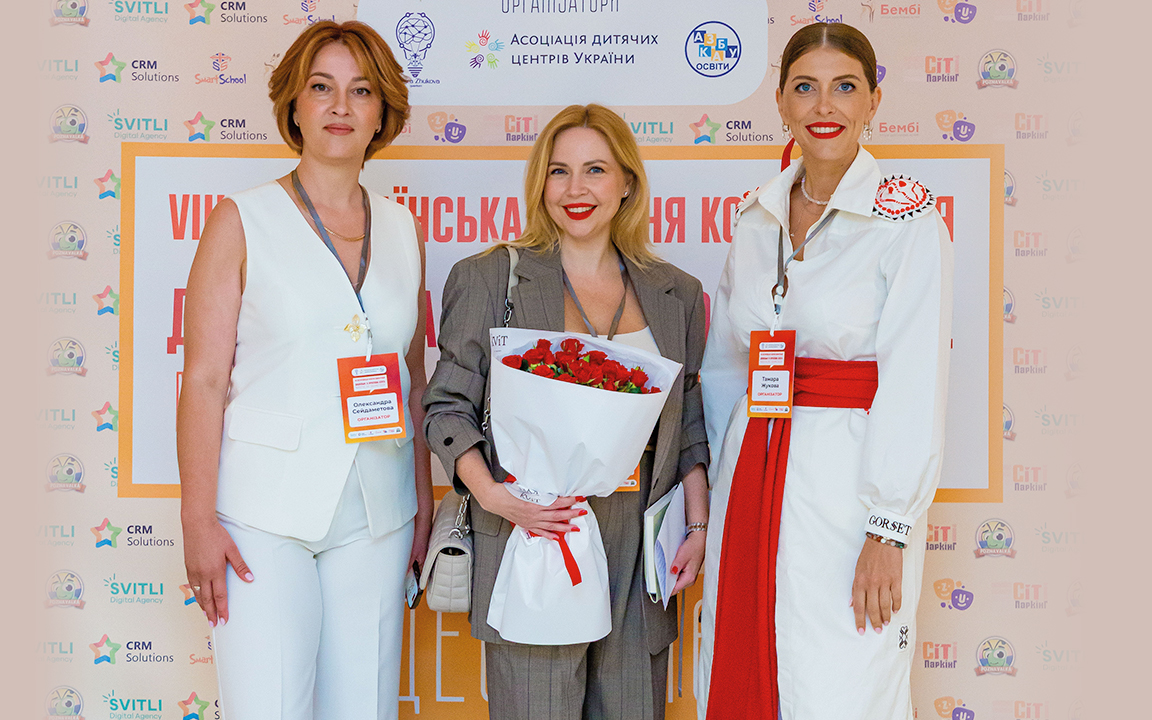
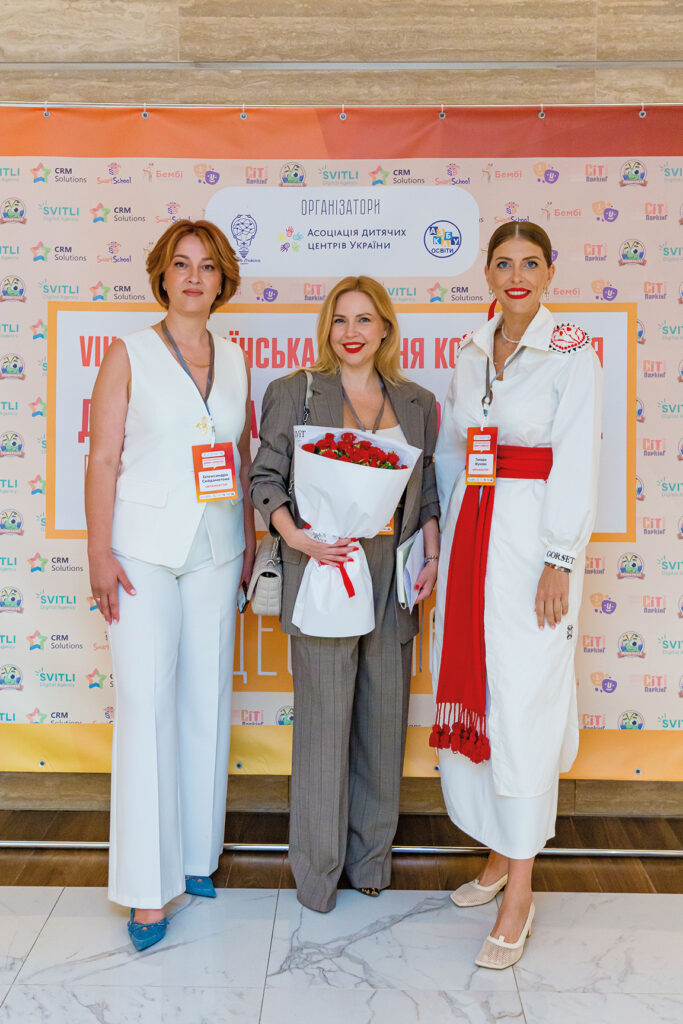
Tamara Zhukova is a clinical and spiritual psychologist, a researcher of the human brain and energy, named Innovative Psychologist of the Year (2024), a team-building and financial growth coach, an international speaker, Ms. Europe 2023, and the founder of educational projects, as well as the organizer of Brand Woman Forum.
Oleksandra Seidametova is an entrepreneur with 17 years of experience in education, the founder of the “Azbuka” network, which includes children’s centers, a lyceum in Odesa, and international educational initiatives across Europe.
Elizaveta Chupryna is the founder of the All-Ukrainian Education Conference, head of the Association of Children’s Centers of Ukraine, and the author of educational programs for educators and leaders. She also founded the preschool networks “Happy Family” and “Country of Leaders.”

The conference has existed since 2015. When did it become clear that it was no longer just an event, but a platform of influence?
Oleksandra Seidametova:
For me, the turning point came after our partnership in 2025. We announced the next conference—and tickets started selling before we even released the program or speaker lineup.
The first 100 seats sold out within 24 hours. We even had to pause sales due to venue limitations.
That’s the key indicator: people are choosing trust in the platform, not just the event itself. Add the geography of participants and the media response, and it becomes clear—this is already market infrastructure.
Elizaveta Chupryna:
It becomes evident when you observe long-term dynamics. People who once attended without their own projects, within a few years become leaders, launch institutions, and return as speakers.
What’s being formed is an environment that accelerates professional growth. When you work with this audience over time, you understand—it’s no longer about an event, but a community with long-term impact.
What changes in management and strategy came with the partnership?
Oleksandra Seidametova:
The main shift was moving from a “conference format” to an educational ecosystem.
In practice, this means:
— strategic planning at least a year ahead;
— regular management sessions;
— launching new products: media, podcasts, a magazine;
— growth in participants and partners;
— a waiting list for speakers.
We began thinking in terms of market influence rather than a single event.
Elizaveta Chupryna:
The decision was intuitive, but strategically precise. The partnership brought a new level of energy and thinking.
We stopped working event-to-event and started operating as a system: daily communication, shared planning, continuous idea generation.
Tamara Zhukova:
New partners signal a shift in the project’s maturity.
We moved away from intuitive management and built a clear structure: development strategy, responsibility distribution, long-term planning.
The focus expanded—from a single event to a full ecosystem that includes educational products, a professional community, and international connections.
The project no longer depends on one individual—it operates as a cohesive, living system.

How does this partnership manifest in practice?
Tamara Zhukova:
Through measurable outcomes.
After the conference, joint educational projects launch, partnerships form between schools and experts, and new businesses emerge.
The deeper shift, however, is in mindset. Competition gives way to a willingness to strengthen one another.
That logic creates scale that cannot be achieved individually.
Oleksandra Seidametova:
We measure unity through results.
Today, we see:
— a consistent flow of speaker applications;
— initiatives to launch new educational products under the platform’s brand;
— partnerships forming after each conference.
The most valuable element is direct connection. Personal relationships between founders and leaders create a level of interaction no online format can replicate.
We’re also seeing cross-sector integration—businesses, from furniture manufacturers to medical services, are actively entering the education space. This has become a true intersection point for the market.
Why prioritize partnership over competition?
Elizaveta Chupryna:
Competition will always exist—it’s a driver for growth. The question is how you engage with it.
We chose a model where strong players can coexist, exchange experience, and amplify each other.
Tamara Zhukova:
Competition often creates a scarcity mindset.
From a neuropsychological perspective, that state puts the brain into stress mode, limiting its capacity for development.
Partnership, on the other hand, expands opportunities: it accelerates growth, increases impact, and delivers deeper results.
We deliberately chose a model that scales potential rather than restricts it.
Oleksandra Seidametova:
This is a pragmatic decision.
Individually, each of us has strong projects. But the scale of this initiative requires объединение ресурсов: audiences, networks, expertise.
Partnership delivers speed and quality in decision-making. Ideas move directly into execution.
This isn’t about friendship—it’s about efficiency and scale.

How are speakers selected?
Tamara Zhukova:
The key criterion is results.
We evaluate not status, but real cases, implementation experience, and the ability to shift thinking.
If knowledge lacks practical validation, it’s not our format.
Our goal is to provide tools that work in reality—not short-term inspiration.
Elizaveta Chupryna:
We work exclusively with practitioners. That’s a принцип.
On stage are founders, leaders, people with real кейсы and measurable outcomes.
Oleksandra Seidametova:
The selection system is multi-layered:
— verified experience and results;
— public positioning of the expert;
— alignment of topic and structure;
— practical value (numbers, tools, cases);
— openness, including the willingness to speak about mistakes.
That’s what builds trust with the audience.
What metrics define the conference’s effectiveness?
Elizaveta Chupryna:
The key indicator is long-term impact. That’s what we will see in 5–10 years: the scale of projects, the level of trust, the brand’s position in the market.
Oleksandra Seidametova:
Operational metrics matter as well:
— ticket sales within the first 24 hours;
— growth in participants (from 200 to 500+);
— number of speaker applications;
— new projects and partnerships formed post-event.
These provide a clear picture of momentum.
Tamara Zhukova:
The number of participants is secondary.
We focus on decisions people make after the conference, the projects they launch, and the changes that unfold months later.
We measure not attendance—but outcomes.
The value of education is defined by transformation.
What challenges arise with scaling?
Tamara Zhukova:
The primary challenge is maintaining depth as you grow.
Scale always carries the risk of simplification and loss of meaning, so we deliberately balance growth with quality.
Another critical factor is the team. Strong results are only possible when people share the same values and approach.
Oleksandra Seidametova:
The main challenge areas:
— financial (large investments in events and media);
— operational (managing scale and quality);
— reputational (increased responsibility).
We don’t avoid risks—we manage them. That’s part of entrepreneurship.
Elizaveta Chupryna:
I see these as working challenges. Growth always requires new solutions—from managing large venues to launching new products.
Are there plans to expand internationally?
Elizaveta Chupryna:
For us, it is essential to show that Ukrainian professionals are not only capable of working within European institutions, but also of bringing real value to them. This must be done thoughtfully — through integration, through respect for the environment, while maintaining a clear understanding of one’s own expertise.
This is not a fast process. It unfolds through small, consistent steps taken by each educator: visibility, growth, communication, a presence on social media, and active participation in professional events.
Through conferences, media, and communities, we have the ability to amplify this message.
Our goal is to show the world that Ukraine is a strong educational nation.
This is our long-term vision for the next decade.
We believe in our people — in our women: strong, intelligent, and proactive. And we are confident that they are capable not only of integrating, but of strengthening the European educational landscape.
Oleksandra Seidametova:
Our goal is to build professional communities across Europe and integrate Ukrainian experience into the global landscape.
We position ourselves as partners who bring value.
Tamara Zhukova:
This is a long-term strategy: through events, media, and communities, we aim to position Ukraine as a strong educational country.
Ukrainian education has clear strengths—flexibility, depth, and the ability to operate in complex conditions.
On the international level, we are not only integrating—we are shaping new approaches: sharing expertise, creating formats, and connecting professionals.
We see this conference as a platform that defines a modern educational culture—practical, adaptive, and scalable.