
Alibaba’s $2 Billion Gaming Exit Signals an Even Bigger Bet on AI
Alibaba Group has agreed to sell its gaming unit, Lingxi Games, to Asia-focused private equity firm Trustar Capital. The deal, is expected to bring the Chinese tech giant more than $2 billion — making it the largest M&A transaction in China’s gaming industry so far in 2026.
What We Know About the Deal
The agreement was reached after several rounds of negotiations, according to an internal memo sent to Lingxi employees by studio CEO Zhou Bingshu. Under the terms of the deal, Alibaba will transfer its entire stake in Lingxi to Trustar Capital. The memo did not disclose the exact purchase price, closing date, or regulatory conditions. Bloomberg had previously valued the transaction at at least $1.5 billion, while later Reuters reports put the figure at more than $2 billion.
According to Zhou, Lingxi’s management team will remain in place following the change in ownership, allowing the studio to continue operating without disruption. Trustar Capital, formerly known as CITIC Capital, is an Asia-focused investment firm managing approximately $10.5 billion in assets across China, Japan, and the United States. Its previous investments include a stake in McDonald’s China business.
Lingxi is best known for the mobile strategy title Three Kingdoms: Strategy Edition, developed in partnership with Japan’s Koei Tecmo. The studio traces its roots to Guangzhou Ejoy, which Alibaba acquired in 2017 at a valuation of approximately $1 billion.
Part of a Broader Strategy
The Lingxi sale is the latest move in a strategic reset Alibaba has been pursuing since late 2024. The company has steadily shed assets it considers non-core while redirecting capital and management attention toward two priorities: artificial intelligence and cloud computing. During that period, Alibaba has sold hypermarket operator Sun Art and department store chain Intime, bringing the total value of its non-core asset disposals to more than $4.6 billion.
What makes the Lingxi sale stand out is what Alibaba is actually giving up. Its previous divestments largely involved physical businesses — real estate, retail chains, or minority financial holdings. Gaming is different: it is digital, profitable, and largely independent of physical infrastructure. Selling it suggests that CEO Eddie Wu and his leadership team are drawing increasingly tight boundaries around what belongs in Alibaba’s future.
The company is increasingly organizing its strategy around two major pillars: “AI and cloud” and “consumption.” E-commerce remains at the heart of Alibaba’s business, but it is no longer the only engine defining the company’s growth story.
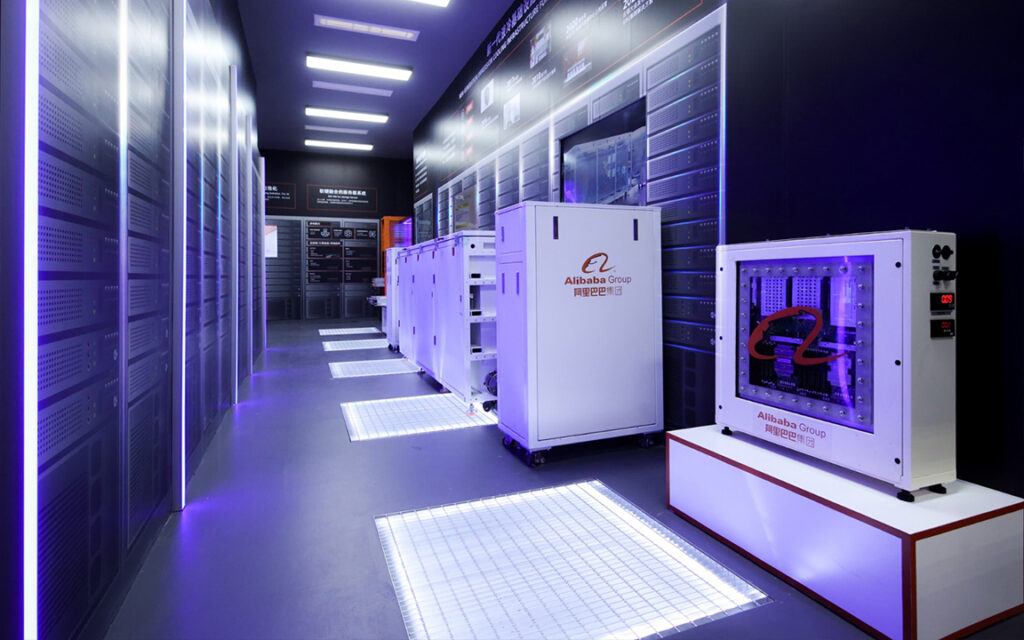
Proceeds from the Lingxi sale could give Alibaba more room to accelerate spending on data centers, proprietary AI chips, its Qwen family of large language models, cloud infrastructure, and applied AI solutions.
The Timing Matters
News of the deal emerged just three days before Alibaba is scheduled to report its April–June 2026 financial results on August 20. The timing sends a clear message to investors: Alibaba wants the market focused on where its capital is going next.
For investors, that makes the Lingxi sale significant beyond its $2 billion-plus price tag. The transaction offers another indication of how aggressively Alibaba is reshaping its portfolio around the businesses it believes will drive its next phase of growth — with AI increasingly at the center of that strategy.
What It Means for the Industry
Alibaba’s move reflects a broader shift across the global technology sector. Diversified tech giants are reassessing sprawling portfolios and selling profitable but strategically peripheral businesses to free up capital for AI infrastructure.
Similar moves are likely to follow as the world’s largest technology companies compete for leadership in artificial intelligence. Scaling AI requires enormous investment in computing power, data centers, chips, models, and talent. For companies with extensive portfolios, selling non-core assets can be a faster and more efficient way to fund those ambitions than raising fresh capital externally.
Alibaba’s decision to part with Lingxi shows just how far that strategic calculus can extend: even a profitable digital business may become expendable when billions of dollars are needed to compete for the next era of technology.