
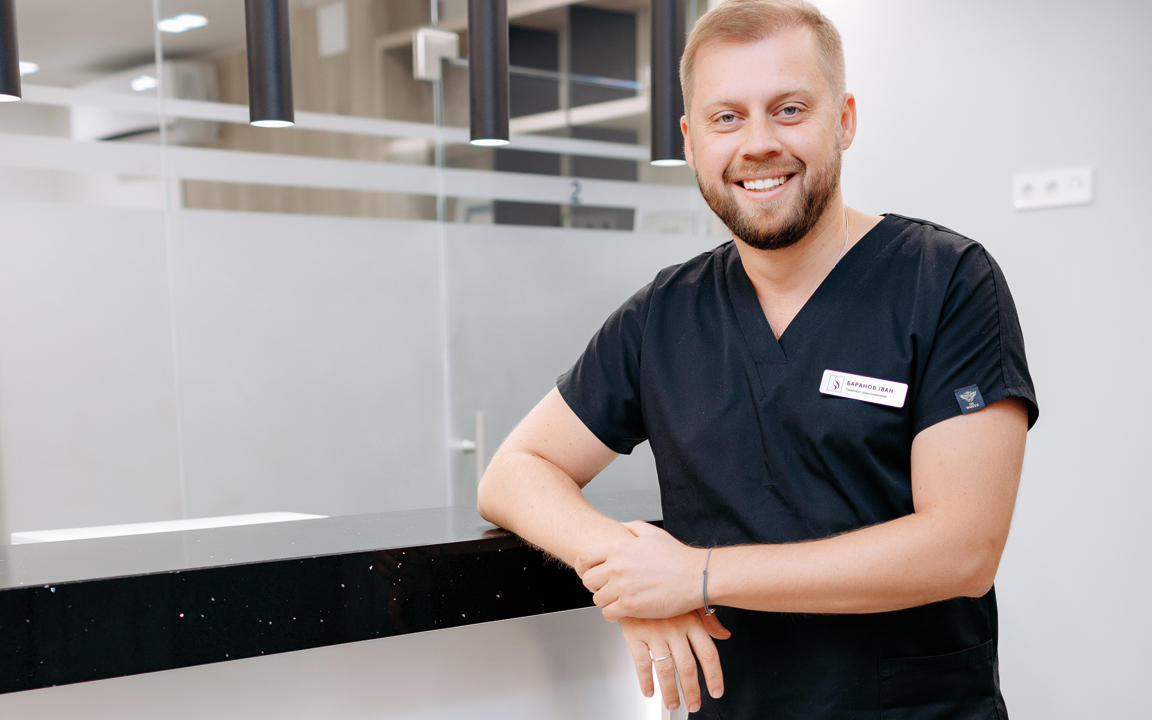
Ivan Baranov: “I Combine the Surgical Precision of Hair Transplantation with the Growth of a Major Business”
Ivan Baranov, PhD, hair transplant surgeon, founder of HairMed and the Institute of Hair Restoration Surgery (IHRS), has spent more than 15 years working in a field where success is measured not only by the number of grafts, but by the way a patient’s life changes after the procedure. His clinics bring together high-tech medicine, aesthetics, and an elevated level of service, while his proprietary techniques are designed to deliver natural, stable results. In this interview, he discusses what pushed him to build a business beyond medical practice, why he is not afraid of training future competitors, and how he preserves the quality and spirit of the brand while expanding a franchise during wartime.
Your personal story is the journey of a doctor who became an entrepreneur and built a powerful brand. What was the “trigger” that pushed you beyond medicine and into developing your own business? And was it frightening to build something of your own while the country was at war and the world was facing crisis?
My personal story began in childhood. Since kindergarten, I had dreamed of becoming a doctor. And that is exactly what happened: I entered medical academy, graduated, worked in intensive care, completed an internship in surgery, and later in combustiology. But I was always drawn to aesthetic medicine — to work that helps people feel more confident in themselves.
At first, I studied trichology, and later hair transplantation. I have now dedicated 15 years to this field. The “trigger” was a combination of several things: aesthetics, the desire to help people feel confident, financial motivation, and the wish to develop not only as a doctor, but also as an entrepreneur. That understanding came with time.
Was it frightening to start? Very much so. Especially from scratch. At first, we had a 30-square-meter space, then 100 square meters, and now we occupy 400 square meters. It was difficult, but I was driven by a dream, and I always felt the support of my wife and family. We never allowed ourselves to think that it might not work out.
Yes, the country is at war, and the world is going through economic and staffing crises. But everyone has to keep working, earning, helping the military, supporting the wounded, and remembering children and social responsibility. We will not be given another life, so we have to live this one with as much quality and purpose as possible.
You do more than perform hair transplants — you train others and are building an institute. Why does this matter to you personally? What do you see as the mission of IHRS? And are you not afraid of “raising” your own competitors?
Today, we work according to well-established internal hair transplantation protocols, which we constantly update and supplement with new knowledge. My entire team and I continue to deepen our expertise in order to remain at the highest level in this field.
Over time, we decided to share our experience and began training Ukrainian specialists in hair transplantation. It is a two-way process: we pass on our own expertise, while also learning new ideas and approaches from our colleagues. On this foundation, we created the Institute of Hair Restoration Surgery and are now developing a professional educational platform.
We actively cooperate with Ukrainian professional associations, including the Association of Trichologists of Ukraine, as well as with specialists from other countries. We organize educational events and workshops, and invite leading experts from Japan, Belgium, Spain, and Greece. This year, on November 11, we plan to hold a major congress dedicated to trichology and hair transplantation.
Am I afraid of training competitors? No. I believe in fair, high-quality competition. My goal is to raise the level of Ukrainian hair transplantation so that we avoid situations like those seen in Turkey, where, for very little money, a transplant may be performed even by unqualified personnel. I want this field in Ukraine to develop at a high professional level, and I want patients to feel confident in the safety and quality of the services they receive.
Hair transplantation is a field surrounded by myths. What is the most absurd misconception you have ever heard? And what should people really know before considering the procedure?
Hair transplantation and trichology alike are surrounded by countless misconceptions. Many of these so-called “truths” are more than a century old, yet they continue to circulate despite being thoroughly disproven by modern science.
One of the most persistent myths is that transplanted hair inevitably falls out after two years. That simply is not true. The transplanted hair is harvested from the donor area, which retains its genetic characteristics throughout a person’s lifetime. As a result, the transplanted follicles continue to grow naturally for years to come.
Another common misconception is that a completely bald area can be restored using minoxidil or topical treatments alone. Once the follicles in a particular area have been permanently lost, no medication, injection, or lotion can regenerate them. In such cases, surgical hair transplantation remains the only effective solution.
Hair transplantation is a serious surgical procedure and should be approached accordingly. Choosing a clinic and surgeon based on expertise, proven results, and medical standards—not advertising or bargain pricing—is one of the most important decisions a patient can make.
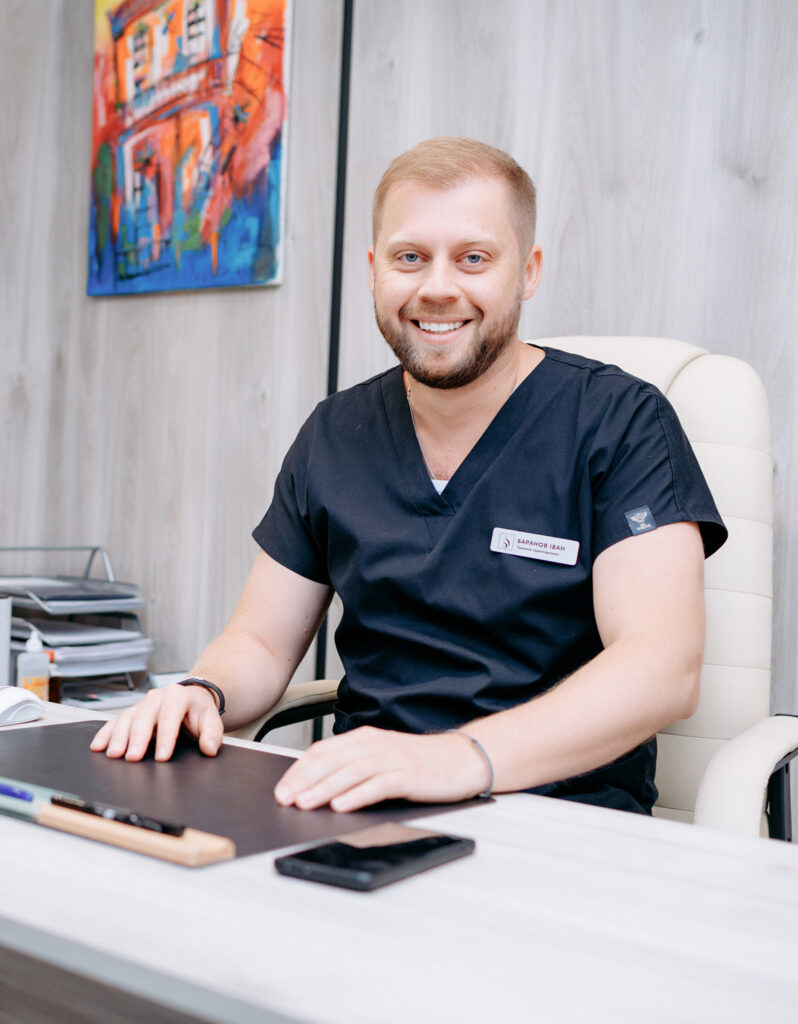
You work with something deeply personal: hair loss. How does a person change after a transplant? Can you share the most emotional case that has stayed with you over the years?
Hair is an incredibly personal subject. For many men in particular, it is not something they openly discuss. Admitting insecurity or vulnerability is often difficult, and when hair loss is perceived as a flaw, it can have a profound impact on self-esteem.
Ironically, men are sometimes easier to work with because they tend to assess the situation more realistically and often accept hair loss as part of life. Yet once they decide to undergo a transplant, nearly 95% of them tell me the same thing afterward: “If I had known the procedure was this comfortable and the recovery only took 10 to 14 days, I would have done it years ago.”
The transformation can be remarkable. Someone who has lived without hair for years suddenly sees themselves differently in the mirror. They look younger, regain confidence, and rediscover the energy and motivation to move forward. Those are the moments that make this profession so rewarding.
The experiences I remember most are often the simplest ones. A former patient walks into the clinic months later—not because they need anything, but simply to say, “Thank you to the entire team. You changed my life.”
Many people still believe hair transplantation is almost exclusively a “man’s issue.” How accurate is that perception? And what challenges do women typically bring to your clinics?
While it is true that approximately 90 to 95 percent of our patients are men, women also seek hair transplantation, and their needs are often quite different.
One of the most common procedures for women is eyebrow restoration. Patients may lose eyebrow hair because of hypotrichosis, excessive plucking, trauma, or other conditions that permanently affect hair growth.
Another group includes women with naturally high hairlines or deep temporal recessions who wish to reshape the frontal hairline, making it easier to wear hairstyles such as a ponytail with greater confidence.
We also treat women experiencing female-pattern androgenetic hair loss, where thinning typically occurs along the central part. Hair transplantation can be an effective option in these cases, although eligibility depends largely on the condition of the donor area. Approximately 30 percent of patients meet the criteria for surgery.
In addition, we treat patients with cicatricial alopecia caused by trauma, burns, or previous surgeries. This includes both women and men, as well as military personnel. For patients living with scar-related hair loss—particularly those recovering from blast injuries sustained during the war—we have developed a dedicated program with individualized treatment conditions to provide the greatest possible support throughout their restoration journey.
You invest heavily in education—not only in medicine. Why is that so important to you? And in your opinion, what separates an exceptional hair transplant surgeon from an average one?
I am constantly learning, and for me it is far more than a professional obligation—it is something I genuinely enjoy. I am passionate about expanding my knowledge of hair transplantation, exploring emerging technologies, and staying current with the latest surgical techniques. I regularly attend international congresses, participate in online lectures, and whenever possible, travel abroad to learn directly from leading experts.
Some people might say that our team already has extensive experience—and that is true. But experience without continuous learning quickly becomes outdated. Ongoing education is essential, both for me personally and for my team, because it allows us to consistently deliver the highest standard of care.
Beyond medicine, I have also spent the past several years developing my knowledge of business—from leadership and team management to building strategic partnerships. Those skills help me assemble the right people, create a strong organizational culture, and understand who shares our values and who does not. I also invest time and resources in areas outside healthcare because I believe that broad personal development ultimately makes you a stronger professional.
So what distinguishes an outstanding hair transplant surgeon from an average one? In my view, it comes down to three qualities: deep expertise and technical mastery, an unwavering curiosity and commitment to lifelong learning, and a genuine desire to help patients rather than simply perform a procedure.

You have developed your own proprietary techniques. Can you give us a glimpse into what makes them unique and how they improve patient outcomes?
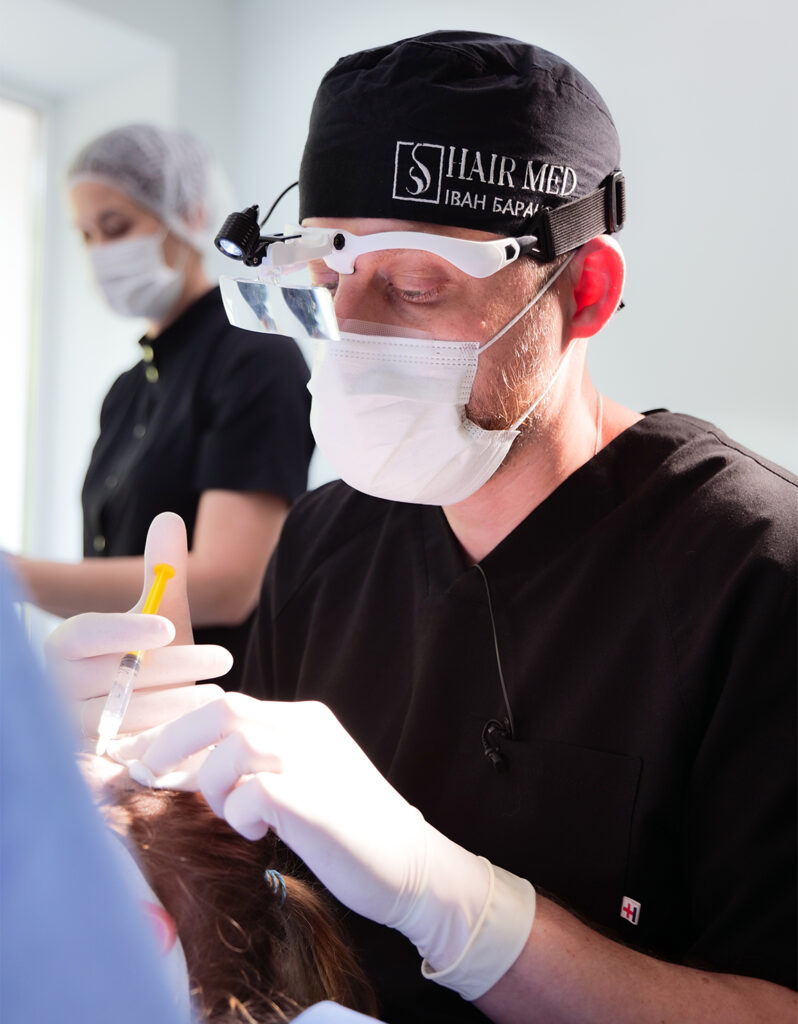
The techniques we use today were developed over many years. They are built on highly detailed clinical protocols that every member of our team follows with absolute precision. These protocols cover every stage of the procedure—from the time management inside the operating room to graft logistics and strict temperature control throughout the transplantation process.
We combine multiple surgical approaches to achieve the most natural-looking results while paying close attention to countless details that remain part of our proprietary expertise. Those nuances have been refined over years of clinical practice and continue to evolve as our knowledge grows.
Our methods are the product of continuous refinement. What began years ago as relatively straightforward surgical work has evolved into something that resembles craftsmanship at the highest level. Every day we continue to sharpen our skills with the same dedication as master artisans perfecting their craft, so that every patient receives results that are natural, aesthetically balanced, and designed to last.